Our Top Picks
 Gator Frameworks Elite Furniture Series 12U Angled Studio31.3 x 21.3 x 7 inches50.05 PoundsCheck on Amazon


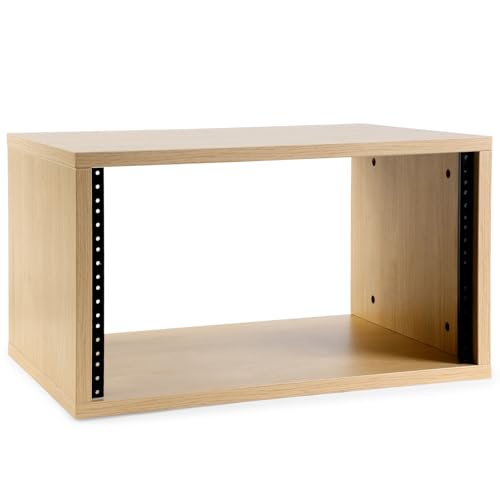

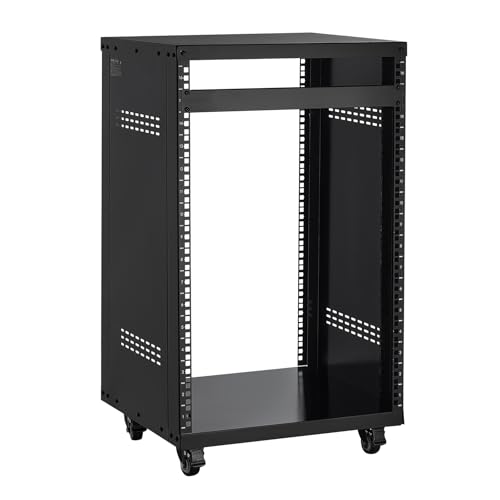
The best studio rack for most home studios is the Gator Frameworks Elite Furniture Series 12U Angled Studio Rack with Locking Casters. It gives you 12 rack units of standard 19-inch mounting in a furniture-grade dark walnut cabinet with an angled face and locking casters, which means it holds a serious amount of outboard gear while still looking like something you would put in a living room. It suits anyone who has outgrown a desk shelf, wants rear access without unbolting everything, and expects the rack to stay in the same room for years. If budget is the binding constraint, the VEVOR 12U AV Rack Stand with Caster Wheels delivers the same 12U of mounting for a fraction of the spend, at the cost of open sides and a utilitarian look. If floor space is the constraint, the Sound Town DIY Slanted 12U packs 12U into a footprint barely wider than a nightstand. Everything below is judged on the six things that actually decide whether a rack works in a room: dimensions, steel or plywood gauge, height and angle, attachment compatibility, anchoring needs, and how much usable space it leaves you.
Top 3 Picks
Best Overall: Gator Frameworks Elite Furniture Series 12U Angled Studio Rack
Twelve rack units, an angled mounting face that keeps front panels readable from a seated position, locking casters, and a dark walnut finish that hides in a living space instead of shouting “server room.” It is the pick for the producer who wants one rack that handles a full front end — interface, preamps, patch bay, power conditioner — and does not need to be hidden behind a door. The angled face is the detail that matters most: it improves sightlines on gear you adjust constantly and reduces the reach-around frustration of a vertical rack.
Best Budget: VEVOR 12U AV Rack Stand with Caster Wheels
An open-frame steel rack with 12U of mounting, removable side panels, and casters, at the lowest cost per rack unit in this roundup. It is the right call for a bedroom or basement studio where the rack lives in a corner and nobody is filming it. You give up furniture finish and enclosed sides; you keep full rear access and standard 19-inch compatibility.
Best Premium for Tight Spaces: Sound Town DIY Slanted 12U (4U Top + 8U Lower)
This one splits 12U into a 4U slanted top section and an 8U lower section, adds a 2U bottom storage bay and a slide-out tray, and rolls on casters. It suits the studio where a single vertical column would be too tall or too visually heavy, and it is the most space-efficient way to rack a dozen units without a dedicated machine room.
Quick Comparison
| Product | Best for | Key specs | Price tier |
|---|---|---|---|
| VEVOR 12U AV Rack Stand with Caster Wheels | Budget-first builds, mobile rigs | Open-frame steel, 12U (21 in / 533 mm of rail), removable side panels, caster wheels, standard 19 in EIA-310 mounting | Budget |
| Sound Town DIY Solid Baltic Birch Slanted 12U (SDRK) | Premium wooden rack with angled top | Baltic birch plywood, 12U, slanted top surface, rubber feet plus casters, assembly required | Premium |
| AcouZen Wooden Desktop Studio Rack | Desktop racks for shallow gear | Wood, 373 mm (~14.7 in) usable depth, threaded rails, 19 in rack-mount compatible, natural finish | Budget |
| Sound Town DIY 2U Studio Rack | One or two units beside a desk | Baltic birch plywood, 2U (3.5 in / 89 mm), weathered brown | Mid-range |
| VEVOR 16U AV Rack | Growing rigs on a budget | Open-frame steel, 16U (28 in / 711 mm), locking caster wheels, removable panels | Budget |
| Gator Frameworks Elite Furniture Series 12U Angled | Best overall for most home studios | Furniture-grade wood, 12U, angled face, locking casters, dark walnut brown finish | Premium |
| Gator Cases Content Creator Series 4U (GR-STUDIO-4U) | Podcast and streaming setups | Wooden rack case, 4U (7 in), 15.25 in rackable depth | Mid-range |
| AceOrbit 4U Desktop Studio Rack Cabinet | Desktop setups that want doors | Wood cabinet, 4U, 19 in pro audio gear compatible | Budget |
| Gator Frameworks Elite Series 2U Desktop Rack | Single desktop unit, tidy look | 2U desktop rack, black finish, 19 in mounting | Mid-range |
| Sound Town DIY 6U Studio Rack (SDRK-Y6B) | Compact floor rack | Baltic birch plywood, 6U (10.5 in / 267 mm), weathered brown | Premium |
| Sound Town DIY 4U Studio Rack, Golden Oak (SDRK-Y4) | Small floor rack, DIY project | Baltic birch plywood, 4U (7 in / 178 mm), golden oak, assembly required | Mid-range |
| Sound Town DIY Slanted 12U with Storage and Tray | Most gear per square foot | Baltic birch plywood, 4U slanted top plus 8U lower, 2U bottom storage, slide-out tray, casters | Premium |
How We Chose
Selection started with the standard, not the styling. Any rack in this roundup had to accept 19-inch EIA-310 gear, which fixes the horizontal hole spacing at 18.312 inches (465 mm) and the vertical unit pitch at 1.75 inches (44.45 mm). Anything that deviated from that was excluded, because a rack that only fits the manufacturer’s own accessories is a dead end. From there we sorted candidates by rack-unit capacity, because U count is the spec that determines how long the rack stays useful: a 4U rack fills faster than most people expect, and a 12U rack absorbs a full front end plus room to grow.
Next came construction and depth. Steel racks were assessed by frame class and openness — open-frame designs win on rear access, enclosed cabinets win on dust and looks. Wooden racks were assessed by panel material, with Baltic birch plywood treated as the premium standard because of its ply count and dimensional stability, and by whether the listing states a usable or rackable depth, since depth is the number that quietly kills builds. Finally we weighed category fit and upgrade path: desktop versus floor, casters versus feet, assembly-required kits versus ready-to-use cabinets, and whether a given rack has a natural next step in the same family. Everything here is based on published specifications and established category standards. We have not tested these racks.
1. VEVOR 12U AV Rack Stand – Best for Budget-First Builds
As an Amazon Associate we earn from qualifying purchases at no extra cost to you.

The VEVOR 12U AV Rack Stand is the answer for the producer who needs capacity more than cosmetics. Twelve rack units is the sweet spot for a serious home setup — it holds a full signal chain plus a couple of synths and still has air gaps left over — and this rack delivers that capacity in open-frame steel at the lowest cost per rack unit in this roundup. It suits bedroom and basement studios, rehearsal rooms, and anyone building a first rack who would rather spend the difference on a preamp than on walnut veneer. It also suits anyone who rewires often, because the removable side panels and open rear make cable work genuinely easy.
- 12U of vertical mounting, equal to 21 inches (533 mm) of rail space
- Standard 19-inch EIA-310 mounting with 18.312-inch (465 mm) horizontal hole spacing
- Open-frame steel construction with removable side panels
- Caster wheels for repositioning without unloading gear
- Front and rear access, which suits patch bays and gear with rear-panel I/O
- Component/AV rack format rather than a sealed cabinet
The core strength here is access. Open-frame racks let you reach the back of a patch bay without pulling the rack away from the wall, and removable side panels mean you can get a hand to a power supply or swap a module without dismantling the whole stack. Casters matter more than people expect: once a 12U rack is loaded with 60 to 100 pounds of gear, you will not want to drag it across a floor to reach a cable, and being able to roll it out, rewire, and roll it back is the difference between a rack you maintain and a rack you avoid touching.
The trade-offs are aesthetic and structural. Open sides mean visible cable spaghetti, dust settles on everything, and there is no rear panel to hide the mess from a camera or a client. Steel tube frames in this class are perfectly adequate for static loads, but they are not furniture, and a tall rolling rack is more tip-prone than a low, anchored cabinet. Load heavy items — power conditioners, amps, transformer-based gear — in the lowest U positions, and keep an eye on the casters when the rack is on thick carpet.
Pros
- Lowest cost per rack unit among the 12U options here
- 12U of capacity leaves real room to grow
- Removable side panels and open rear make rewiring painless
- Casters let you move a loaded rack without unloading it
- Standard 19-inch mounting accepts shelves, vent panels, drawers and cable managers from any brand
Cons
- Open frame shows every cable and collects dust
- No furniture finish; it looks like IT equipment
- Rolling racks are less stable than anchored cabinets
- Castors add height, so the top U sits higher than a footed rack
- No rear panel to protect connectors from bumps
Against the nearest alternative in this list — the VEVOR 16U AV Rack — the decision is purely about headroom. If you currently own 9 or 10U of gear, or you know a second synth and a rack drawer are coming, the 16U gives you 28 inches of rail instead of 21 for a modest step up in footprint and cost, and it uses locking casters rather than plain ones. If you are confident you will stay under 12U, buy the 12U and keep the money. Against the Gator Frameworks Elite 12U, the capacity is identical; you are paying a large premium for the angled face, the furniture finish, and locking casters. That is a fair trade if the rack lives in a visible room, and a waste if it lives in a closet.
2. Sound Town DIY Solid Baltic Birch Plywood Slanted 12U Studio Rack – Best Premium Wooden Rack
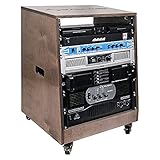
The Sound Town DIY Solid Baltic Birch Slanted 12U is the rack for someone who wants wood, wants 12U of capacity, and is willing to spend a Saturday with a screwdriver to get it. It arrives as a flat kit, assembles into a slanted 12U column in weathered brown, and ships with both rubber feet and casters so you can choose a fixed or mobile installation. It suits the home studio that doubles as a spare room or a corner of a living space, where a steel frame would look out of place and a fully finished cabinet would cost more than the gear going into it. It also suits anyone who wants the slanted top surface for a small mixer, a monitor controller, or a laptop.
- 12U of standard 19-inch mounting, 21 inches (533 mm) of rail space
- Solid Baltic birch plywood construction — a multi-ply hardwood-core panel known for dimensional stability and screw-holding strength
- Slanted profile with an angled top section
- Weathered brown finish
- Rubber feet and casters both included
- Assembly required; shipped as a DIY kit
Baltic birch is the reason this rack costs more than a steel frame of the same capacity. It is a plywood made from many thin veneers of birch, which gives it far more internal strength and far better resistance to humidity swings than the particleboard or MDF you find in budget furniture. In a rack, that matters because a 12U column is a structural object: the side panels carry the entire load of everything bolted to the rails. The slanted geometry is the second advantage. By raking the mounting face back, the rack presents front panels at an angle that is easier to read and easier to reach from a seated position, and the slanted top surface becomes usable desk space instead of dead air.
Assembly is the honest downside, and it is worth thinking through before you buy. A flat-pack rack means you are the quality control: you need to square the frame before you fully tighten anything, and you need to confirm that the rail holes line up with the standard 18.312-inch spacing before you load gear. Do it on a hard floor rather than carpet, keep the fasteners organized, and tighten in stages. Done properly, a bolted Baltic birch rack is extremely rigid. Done carelessly, it will have a slight twist that shows up as stubborn screws every time you add a unit.
Pros
- Baltic birch plywood is a genuinely better material than typical flat-pack furniture board
- Slanted face improves visibility and reach for gear you adjust often
- Slanted top doubles as a shelf for a small mixer or controller
- Rubber feet and casters included, so you can change your mind later
- 12U of capacity in a footprint that stays narrow
Cons
- Assembly required, and a badly squared frame is a permanent annoyance
- Wooden rails are not as forgiving of repeated re-tapping as steel
- Heavier than an equivalent open-frame steel rack
- Weathered brown is a specific look that will not match every room
- No rear panel or door, so cables remain visible
The nearest alternative is the Sound Town DIY Slanted 12U with the 4U top, 8U lower split, 2U storage bay and slide-out tray. Both are premium Baltic birch slanted racks with casters, and both give you 12U of mounting. The difference is geometry: this one is a single slanted column, which is simpler to assemble and simpler to load, while the split version trades a little assembly complexity for a lower overall profile, dedicated bottom storage, and a pull-out tray for a keyboard or a laptop. If you want one clean angled face and minimal fuss, take this one. If you want the rack to disappear under a window or fit beneath a sloped ceiling, take the split version.
3. AcouZen Wooden Desktop Studio Rack – Best Budget Desktop Rack
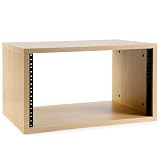
The AcouZen Wooden Desktop Studio Rack is a small-format rack for people whose gear is shallow, not deep. It is a 19-inch rack-mount compatible wooden unit with a stated usable depth of 373 mm — about 14.7 inches — and threaded rails rather than the square holes and cage nuts you find on IT hardware. It suits the desktop producer running an interface, a preamp, a patch bay and a headphone amp, all of which are typically short-chassis devices. It also suits anyone who wants the rack sitting on the desk within arm’s reach, at a natural finish that does not fight with a wooden desk.
- 19-inch rack-mount compatible
- 373 mm (approximately 14.7 in) usable depth
- Threaded rails — screws thread directly into the rail, no cage nuts required
- Natural wood finish
- Desktop format, sized for a desk or shelf rather than the floor
Depth is the specification to think hardest about here. A usable depth of roughly 14.7 inches is generous for a desktop rack and comfortably swallows interfaces, most preamps, patch bays, headphone amps, monitor controllers and rack-mounted DI boxes. It will not swallow a deep tube preamp, a rack-mounted synth with a long chassis, or a rack server. The rule of thumb: measure the deepest unit you own, then add about 2.5 inches for rear cable bend radius and connector protrusion. If that total comes in under 14.7 inches, this rack works. If it comes in over, no amount of clever cable routing will save you.
Threaded rails are a real advantage on a wooden desktop rack and worth understanding before you buy anything in this category. In an IT-style rack, you get square holes and clip in cage nuts, which is flexible but fiddly, especially in a tight desktop space where you can barely see the hole. Threaded rails have the screw thread cut directly into a metal insert or a reinforced wooden rail, so you just drive the screw. The trade-off is that the threads are a wear item: cross-thread one and it is annoying, strip one and you have lost a mounting point. Start every screw by hand, never force one, and do not overtighten into wood-backed rails.
Pros
- 373 mm of usable depth handles most desktop-class outboard gear
- Threaded rails make mounting faster than cage nuts, especially in tight spaces
- Natural wood finish suits a desk rather than a machine room
- Puts gear at desk height, where you actually adjust it
- Budget tier pricing for a wooden rack with real depth
Cons
- 14.7 inches of usable depth rules out deep chassis gear
- Threaded rails wear faster than square-hole rails if you are careless
- Small capacity — a desktop rack fills quickly once you add a power conditioner
- Desktop placement means it shares space with monitors and a keyboard
- Not designed to carry the weight of a large power amp
Compared with the AceOrbit 4U Desktop Studio Rack Cabinet, the AcouZen unit is the more open, more accessible design, while the AceOrbit is an enclosed wooden cabinet with doors. If you want gear visible, quickly reachable, and ventilated by open air, the AcouZen format is the better fit. If you want the gear hidden, dust-protected, and visually quiet, the AceOrbit cabinet wins. Both are desktop racks at the budget tier; the deciding question is whether you want to see your front panels or not.
4. Sound Town DIY 2U Studio Rack – Best for a Single Desk-Side Unit

Two rack units is not much, and that is exactly the point. The Sound Town DIY 2U Studio Rack is a Baltic birch plywood rack sized to hold 3.5 inches (89 mm) of panel space — enough for one power conditioner, one interface, one headphone amp, or one rack drawer — in a weathered brown finish that matches the rest of the Sound Town wooden range. It suits the producer who has one piece of gear that really wants to be rack-mounted, and who does not want to commit a shelf or a floor rack to it. It also suits anyone building a matching wooden setup piece by piece and wanting the smaller units to look like a family.
- 2U of mounting, equal to 3.5 inches (89 mm) of vertical panel space
- Solid Baltic birch plywood construction
- Standard 19-inch rack-mount compatibility
- Weathered brown finish matching the Sound Town wooden rack line
- Assembly required as a DIY kit
The case for a 2U wooden rack is tidiness and stability rather than capacity. A power conditioner that lives on the floor gets kicked, unplugged, and covered in dust; the same unit in a 2U rack sits at a fixed height with cables dressed and a switch you can reach. Because it is short, a 2U rack is inherently stable — there is almost no leverage for it to tip — which makes it a sensible choice for a shelf, a desk return, or the top of a low cabinet. Baltic birch means the panels will hold screws repeatedly without crumbling, which matters in a small rack where you may change what is mounted more often than you expect.
Be realistic about the capacity ceiling. A single power conditioner plus a single interface already fills 2U, and there is no room for a vent panel. If you own three or more rack pieces, skip straight to a 6U or 12U rack; buying a 2U and then a 4U and then a 6U costs more than buying once. The 2U format is best treated as a deliberate, permanent home for one or two specific units, not as a starter rack you plan to grow.
Pros
- Very stable — a short rack has almost no tip-over leverage
- Baltic birch panels hold screws well over repeated changes
- Fits on a desk return, shelf, or low cabinet
- Matches the rest of the Sound Town wooden range
- Low commitment way to rack-mount one essential unit
Cons
- Only 3.5 inches of panel space, with no room for vent gaps
- No growth path — you will outgrow it the moment you add gear
- Assembly required for a very small rack
- Wooden construction costs more than a steel 2U bracket
- No casters or mobility
The nearest alternative is the Gator Frameworks Elite Series 2U Desktop Studio Rack in black. Both hold 2U, both sit on a desk, and both are aimed at the same job. The Sound Town unit is a DIY Baltic birch kit in a warm weathered brown; the Gator unit is a ready-to-use black desktop rack with the cleaner, more industrial look of a furniture series. If you want to match wooden studio furniture and do not mind assembling, take the Sound Town. If you want to unbox it and mount gear in five minutes, take the Gator.
5. VEVOR 16U AV Rack – Best Budget Rack for a Growing Rig

The VEVOR 16U AV Rack is the same budget-minded open-frame formula as the 12U version, scaled up to 16U — 28 inches (711 mm) of rail space — and upgraded with locking caster wheels. It suits the producer who already owns 10 to 14U of gear, or who knows they will within a year. Sixteen units is a lot of rack: a full front end, a couple of synths, a power conditioner, a patch bay, and still a spare U or two for a drawer. It also suits anyone running a small project studio or a rehearsal space where the rack is a working tool rather than a piece of decor.
- 16U of vertical mounting, equal to 28 inches (711 mm) of rail space
- Standard 19-inch EIA-310 mounting
- Open-frame steel construction
- Locking caster wheels, so the rack stays put once positioned
- Removable panels for access to the rear of installed gear
Locking casters are the meaningful upgrade over the 12U model. On a tall rack, the difference between a caster that rolls freely and one that locks is the difference between a rack that drifts when you pull a stiff cable and a rack that stays where you left it. Sixteen U also changes the structural picture: a fully loaded 16U rack is heavy, and the taller it gets, the more the top of the rack acts as a lever. That makes locking casters, sensible weight distribution, and a wall strap or anchor genuinely important rather than optional. Load the power conditioner, any amplifier, and anything with a big transformer into the bottom three or four U positions, and keep light gear — patch bays, drawers, vent panels — up top.
The other thing 16U buys you is proper ventilation spacing. Heat is the most common cause of premature gear failure in a home rack, and the fix is boring: leave a 1U vent panel above and below anything that runs warm, especially power amps and tube preamps. On a 12U rack that usually means sacrificing a unit you wanted for gear. On a 16U rack, you have the space to do it properly without thinking hard about it.
Pros
- 28 inches of rail space gives real headroom for growth
- Locking casters keep a tall rack from drifting
- Open frame and removable panels make rear access easy
- Cheapest way to get to 16U in this roundup
- Enough capacity to include proper 1U vent gaps
Cons
- Tall and heavy when loaded — tip-over risk is real without anchoring
- Open frame shows cables and collects dust
- No furniture finish for visible rooms
- Overkill if your gear list is stable at under 10U
- Casters raise the overall height further
Against the VEVOR 12U, the choice is arithmetic. If your current gear totals 8U or less and you have no expansion plans, the 12U saves money and floor space. If you are at 10U or expect to be, the 16U is the cheaper long-run decision because it avoids a second rack purchase. Against the Gator Frameworks Elite 12U, you are choosing between 16U of utilitarian capacity and 12U of furniture-grade finish — a genuine trade of space for looks, not a straight upgrade in either direction.
6. Gator Frameworks Elite Furniture Series 12U Angled Studio Rack – Best Overall

The Gator Frameworks Elite Furniture Series 12U Angled Studio Rack is the rack that solves the problem most home studios actually have: the gear is good, but the room is also a room. It delivers 12U of standard 19-inch mounting in a dark walnut brown cabinet with an angled face and locking casters, which means it holds a complete front end while looking like furniture rather than infrastructure. It suits the producer whose studio shares space with daily life, and it suits anyone who adjusts front panels regularly, because the raked mounting face makes controls easier to read and reach from a seated position.
- 12U of standard 19-inch rack mounting, 21 inches (533 mm) of rail space
- Angled mounting face, which improves sightlines and access
- Furniture-series cabinet construction in a dark walnut brown finish
- Locking casters for mobility plus a stable working position
- Elite Furniture Series design language, intended for visible rooms
The angled face is the feature worth paying for. In a vertical rack, the top units sit above eye level and their controls are nearly unreadable; the bottom units require you to crouch. Angling the whole mounting plane back means every front panel faces roughly the same direction, which is why angled racks are standard in broadcast and post-production rooms. If you are riding a monitor controller, tweaking a preamp gain, or patching a bay several times a session, the ergonomic difference is not cosmetic — it changes how often you actually use the gear.
Locking casters matter here for a different reason than on a steel frame. A wooden cabinet this size is heavy, and rolling it on bare casters across a wood floor is a good way to scratch the floor and drift the rack out of position. Locking casters let you move it for rewiring and then lock it in place. As with any 12U rack, load heavy items low, and if the rack sits anywhere near a doorway or a walking path, use the locks every time and consider a wall strap — an unanchored 12U cabinet with 80 pounds of gear in it is not something you want to catch with a hip.
Pros
- Angled face genuinely improves day-to-day usability
- Furniture-grade finish suits living rooms and on-camera spaces
- Locking casters combine mobility with stability
- 12U is enough capacity for a complete signal chain plus room to grow
- Standard 19-inch mounting accepts any EIA-310 accessory
Cons
- Premium tier pricing, several times a budget steel rack
- Heavier than an open-frame rack of the same capacity
- Angled geometry slightly reduces usable depth for deep chassis gear
- Wood finish shows scuffs from gear being slid in and out
- Overkill if the rack lives permanently in a closet
The nearest alternative is the VEVOR 12U AV Rack Stand. Same capacity, same standard, wildly different ownership experience. The VEVOR gives you 12U for the lowest cost per unit in this roundup and full rear access, but it looks like a component rack and lives best out of sight. The Gator gives you the same 12U with an angled face, a furniture finish, and locking casters. Choose the Gator if the rack is in a room you care about or if you tweak front panels constantly. Choose the VEVOR if the rack is in a closet, a basement, or a rack room, and the money is better spent on gear.
7. Gator Cases Content Creator Series 4U Wooden Studio Rack Case – Best for Content Creators

The Gator Cases Content Creator Series 4U is built around one number: 15.25 inches of rackable depth. That is a specific, useful amount of depth for a small rack — enough for most interfaces, preamps, headphone amps, patch bays and stream-deck-style rack accessories, and not enough for deep tube gear or rack servers. The 4U format holds 7 inches (178 mm) of panel space, and the wooden case construction is aimed at creators who want a tidy, self-contained block of gear for podcasting, streaming or video production rather than a full studio wall.
- 4U of standard 19-inch mounting, equal to 7 inches (178 mm) of panel space
- 15.25 inches (approximately 387 mm) of rackable depth
- Wooden rack case construction, Content Creator Series
- Part number GR-STUDIO-4U
- Compact format intended for desktop or small-footprint placement
The rackable depth figure is the one to check against your gear list before ordering, and here is the calculation. Take the deepest unit you plan to mount — say an interface at 10 inches — and add roughly 2.5 inches for rear connectors and cable bend radius. That gives 12.5 inches, which fits comfortably inside 15.25. Now try a preamp at 14 inches deep: 14 plus 2.5 is 16.5 inches, which does not fit, and no amount of right-angle connector shopping will reliably recover 1.25 inches. Depth is the specification people skip and then regret, because it cannot be fixed after purchase.
Four units is a deliberate limit, and it works when you treat the rack as a defined signal block: interface, preamp, headphone amp, power conditioner. It stops working the moment you want a patch bay and a drawer as well. If your plan involves a rack-mounted synth, a second preamp, or anything with a large transformer, this is the wrong capacity class and you should be looking at a 6U or 12U rack instead. The wooden case format is the appeal here — it looks intentional on a desk or a shelf in a way that a steel frame does not, which is precisely the Content Creator Series brief.
Pros
- 15.25 inches of rackable depth handles most creator-class outboard
- Compact 4U format fits on a desk or a shelf
- Wooden case looks deliberate in an on-camera space
- Enough depth for interfaces, preamps and patch bays with room for cables
- Clear, defined capacity encourages a tidy, purpose-built signal chain
Cons
- 4U fills fast once you add a power conditioner
- 15.25 inches rules out deep chassis gear
- More expensive per rack unit than a budget steel rack
- No room for 1U vent gaps at full capacity
- Not a growth platform
Against the AceOrbit 4U Desktop Studio Rack Cabinet, both are 4U wooden units for 19-inch gear, and both sit at desk scale. The Gator differentiates itself with a published rackable depth figure — 15.25 inches — which lets you check fit before you buy, plus the Content Creator Series positioning. The AceOrbit is the budget route to an enclosed 4U desktop cabinet. If depth certainty matters to you, the published Gator number is worth the premium; if your gear is all shallow and you just want an enclosure, the AceOrbit does the job for less.
8. AceOrbit 4U Desktop Studio Rack Cabinet – Best Budget Desktop Cabinet
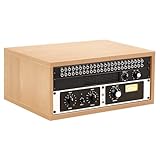
The AceOrbit 4U Desktop Studio Rack Cabinet is an enclosed wooden 4U rack for 19-inch pro audio gear, aimed at desktop setups where the gear should be visible as furniture but not as a wiring diagram. Four units gives you 7 inches (178 mm) of panel space, which is a natural fit for an interface, a preamp, a headphone amp and a power conditioner. It suits the home producer who wants front panels accessible while cables, power bricks and the back of the gear stay out of view, and who is working at the budget end of the market.
- 4U of standard 19-inch mounting, equal to 7 inches (178 mm) of panel space
- Wood cabinet construction with an enclosed format
- Compatible with 19-inch pro audio gear
- Desktop footprint, sized for a desk or shelf placement
The enclosed cabinet format is the defining choice, and it cuts both ways. On the plus side, an enclosure hides cable clutter, keeps dust off the gear, and presents a tidier face in a room where you also work. On the minus side, enclosures restrict airflow, and heat is the leading cause of premature failure in racked outboard gear. If you mount a power conditioner or a class-A preamp in an enclosed 4U cabinet, plan the ventilation deliberately: leave the top U empty if you can, do not stack the cabinet flush against a wall, and do not put it inside a closed shelf unit. An open-frame rack tolerates careless thermal planning. A closed cabinet does not.
Capacity is the other constraint. Four units is genuinely small, and the moment you add a patch bay you are out of space. Treat this cabinet as the permanent home for a fixed, four-piece desktop chain rather than as a rack you will grow into. That said, for a fixed desktop chain it does the job well: gear at desk height, controls facing you, cables contained, and a wooden cabinet that does not look like a data center.
Pros
- Enclosed format hides cables and protects gear from dust
- Wooden cabinet looks intentional in a home or on-camera space
- Budget tier pricing for an enclosed 4U cabinet
- Desktop placement keeps controls within arm’s reach
- 19-inch compatibility means standard accessories fit
Cons
- Restricted airflow compared with open-frame racks
- Only 4U of capacity, with no growth room
- No published usable depth, so measure your deepest unit and allow rear clearance
- Wood construction is not designed for very heavy units
- Enclosed sides make rear access harder during rewiring
The nearest alternative is the Gator Cases Content Creator Series 4U, which offers the same 4U capacity and the same wooden-case idea but publishes a 15.25-inch rackable depth. The AceOrbit is the budget pick: if your gear is shallow and you want an enclosed desktop cabinet for the least money, it fits the brief. The Gator is the safer pick if you need to verify depth against a specific piece of gear before committing, because a stated rackable depth removes the guesswork. For shallow desktop gear, the difference is mostly price; for anything deeper than about 12 inches, the Gator’s published figure is worth having.
9. Gator Frameworks Elite Series 2U Desktop Studio Rack – Best Small Desktop Rack

The Gator Frameworks Elite Series 2U Desktop Studio Rack in black is a small, ready-to-use desktop rack for exactly one or two units. Two rack units is 3.5 inches (89 mm) of panel space — enough for a single interface, a single power conditioner, or a headphone amp and a rack drawer. It suits the producer who has one piece of gear that belongs in a rack and wants it sitting at desk height in a clean black finish that matches a modern studio desk, without assembling anything or dedicating floor space to a rack.
- 2U of standard 19-inch mounting, equal to 3.5 inches (89 mm) of panel space
- Desktop format, sized to sit on a desk or shelf
- Black finish from the Gator Frameworks Elite Series
- Ready to use, no assembly kit
The appeal of a 2U desktop rack is that it converts one loose box into a fixed, wired, always-ready part of the desk. A power conditioner that lives on the floor gets kicked and unplugged; the same unit in a 2U desktop rack has a permanent home, dressed cables, and a switch you can find without crawling. Because it is short and sits on a flat surface, stability is a non-issue — there is essentially no leverage for it to tip, which makes it one of the safest rack formats for a shared room or a desk that gets bumped.
The limits are the same as any 2U format: no vent gaps, no growth, and no ability to absorb a third unit. It is also a rack for gear that does not need rear access often, since a desktop rack usually sits against a wall or a monitor. If you rewire frequently or own more than two rack pieces, this is the wrong class of product and a 6U or 12U floor rack will serve you far better. If you own exactly one rack-mounted unit and want it tidy, this is one of the cleanest ways to do it.
Pros
- Ready to use with no assembly
- Very stable — a 2U desktop rack cannot realistically tip
- Black finish matches modern studio furniture
- Puts one or two units at desk height with dressed cables
- Small footprint that does not consume floor space
Cons
- Only 3.5 inches of panel space, with no vent gap allowance
- No growth path at all
- Mid-range pricing for a very small rack
- Rear access is awkward when placed against a wall
- Not suitable for heavy amplifiers
The nearest alternative is the Sound Town DIY 2U Studio Rack in Baltic birch. Both hold 2U, both sit on a desk, and both are aimed at the same job. The Gator is the ready-to-use black option with no assembly; the Sound Town is a DIY Baltic birch kit in weathered brown that matches wooden studio furniture. If you want to unbox and mount in five minutes, take the Gator. If you want the warm wooden look and do not mind building it, take the Sound Town.
10. Sound Town DIY 6U Studio Rack – Best Mid-Size Wooden Floor Rack

The Sound Town DIY 6U Studio Rack is the middle child of the Sound Town wooden range, and for a lot of home studios it is the right size. Six rack units is 10.5 inches (267 mm) of panel space — enough for an interface, a preamp, a patch bay, a headphone amp, a power conditioner and a rack drawer, or a smaller number of larger units. It suits producers who have outgrown desktop racks but do not want a 12U column dominating a room, and it suits anyone building a matched wooden setup who wants the rack to sit at a comfortable working height rather than at desk level.
- 6U of standard 19-inch mounting, equal to 10.5 inches (267 mm) of panel space
- Solid Baltic birch plywood construction
- Weathered brown finish matching the Sound Town wooden range
- Floor-standing format
- Assembly required as a DIY kit
Six U is the capacity sweet spot for a fixed signal chain. It is small enough to sit under a window or beside a desk without becoming the dominant object in the room, and large enough to hold everything in a typical home setup without the “which unit do I sacrifice” conversation that a 4U rack forces. It also leaves room for one or two 1U vent gaps, which is more than a 4U rack can offer and is the practical reason to step up: heat management needs space, and space needs units.
Baltic birch construction is the reason this rack sits in the premium tier despite the modest capacity. Multi-ply birch holds screws far more reliably than particleboard or MDF, resists humidity-driven warping, and takes stain evenly — which matters for a rack you may keep for a decade. As with any flat-pack, assembly quality decides the final result: build it on a hard floor, square the frame before final tightening, and check that the rail holes land at the standard 18.312-inch spacing before you mount anything. A well-assembled Baltic birch 6U rack is rigid and quiet; a rushed one will fight you every time you add a unit.
Pros
- Capacity sweet spot — enough for a full chain without dominating a room
- Leaves room for proper 1U vent gaps
- Baltic birch plywood is durable and dimensionally stable
- Matches other Sound Town wooden racks for a consistent look
- Lower profile than a 12U column, easier to place R