Key takeaways
- Gas: Clay and ceramic may work over a low flame, often with a diffuser. Keep flames from climbing the sides.
- Electric coil: Use low heat and make sure the base sits flat. A diffuser may be required for clay or ceramic.
- Glass-top electric: Avoid dragging heavy cookware across the surface. Check for a smooth, stable base.
- Induction: Choose magnetic cast iron or a purpose-built induction stainless-steel base. A ceramic or clay vessel will not heat directly without compatible equipment.
- Oven: Confirm the maximum temperature for both the base and lid. Decorative paint, wooden handles, and some glazes have lower limits.
Best Moroccan Tagine Pots for Authentic Cooking
The best Moroccan tagine pot for most home cooks is a glazed ceramic tagine with a 2–3 quart base, but unglazed clay is the closest choice for traditional cooking, cast iron is the most versatile for modern stovetops, and stainless steel is the easiest to maintain.
Quick comparison: which tagine construction suits you?
| Construction | Typical capacity | Approx. weight | Stovetop compatibility | Best for | Main drawback |
|---|---|---|---|---|---|
| Unglazed clay | 1.5–3.5 qt | 4–8 lb | Gas with diffuser; some electric and induction setups require a diffuser | Traditional flavor and gentle braising | Fragile and sensitive to thermal shock |
| Glazed ceramic | 1.5–4 qt | 4–9 lb | Usually gas and electric; induction generally requires a compatible diffuser | Traditional presentation with easier cleaning | May crack if heated too quickly |
| Cast iron | 2–5 qt | 8–15 lb | Usually gas, electric, and induction | Frequent cooking and high heat versatility | Heavy and needs rust prevention if bare |
| Stainless steel | 2–5 qt | 4–9 lb | Usually compatible with gas, electric, and induction | Low-maintenance weeknight cooking | Less traditional heat behavior and presentation |
The figures above are useful buying ranges rather than universal specifications. Actual weight and capacity vary with wall thickness, lid shape, and whether the listed capacity refers to the cooking base alone or the complete vessel.
Our top picks

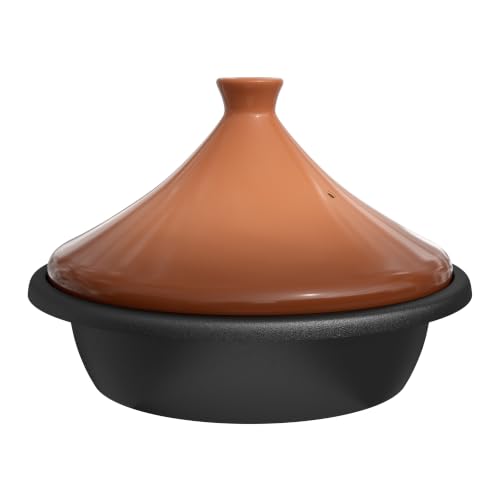


As an Amazon Associate we earn from qualifying purchases at no extra cost to you. Ratings are shown as listed on Amazon.
Our picks by cooking situation
Best for authentic low-and-slow cooking: unglazed clay
Unglazed earthenware is the traditional option. Its porous walls and relatively gentle heat response suit dishes that simmer slowly with onions, spices, vegetables, and modest amounts of liquid. The conical lid returns condensed moisture to the base, so a tagine can produce tender food without being filled like a conventional stew pot.
Choose a clay tagine when flavor, process, and presentation matter more than convenience. Look for a cooking tagine—not a purely decorative serving piece—with a thick, evenly made base and clear instructions for stovetop use. Many clay vessels need a metal heat diffuser, especially on electric or glass cooktops.
Unglazed clay usually requires an initial soak or seasoning routine specified by the maker. It should be started over low heat, never moved directly from a refrigerator to a hot burner, and allowed to cool before washing. Small hairline cracks can develop from repeated thermal shock, so this is not the best first choice for rushed weekday cooking.
Best traditional-style compromise: glazed ceramic
Glazed ceramic gives you the familiar tagine shape while reducing absorption and simplifying cleanup. It is a strong choice for cooks who want to serve the dish at the table but do not want to manage porous clay after every use. Established ceramic cookware makers, including Emile Henry, offer tagine-style cookware designed for oven use and, depending on the model, selected stovetop applications.
Glaze does not make every ceramic tagine induction-ready. Check for an explicit stovetop rating, and use a diffuser when the instructions require one. A ceramic tagine with a 2–3 quart base is generally suitable for two to four portions; filling it much higher than the widest part of the base can interfere with even cooking and make the lid unstable.
Best for induction and frequent use: cast iron
Cast iron provides excellent heat retention and is usually the most forgiving choice for browning onions or meat before a long simmer. Enameled versions are easier to clean and do not require traditional cast-iron seasoning. Bare cast iron works well too, but it must be dried thoroughly and lightly oiled to limit rust.
Cast iron is the practical winner for cooks who use a tagine several times a month, have an induction cooktop, or want one vessel that can move from burner to oven. The trade-off is weight: a large cast-iron tagine can weigh more than the food inside it. Lift it with two hands and protect glass cooktops from impact.
Cast iron also changes the cooking rhythm. It holds heat longer than clay or thin ceramic, so use a lower setting after the vessel is hot. Excessive heat can scorch the bottom while the conical lid continues trapping steam.
Best for easy maintenance: stainless steel
Stainless-steel tagines are less traditional, but they are useful when durability and simple cleanup are priorities. They are often lighter than cast iron and commonly work on induction when the base contains a magnetic layer. Unlike clay and bare cast iron, stainless steel needs no soaking or seasoning.
Choose a model with a substantial, encapsulated base rather than very thin sheet metal. A thin base can create hot spots that burn onions or spices before the liquid begins to simmer. Stainless steel also does not retain heat as long as cast iron, so it may need slightly closer temperature control during a long braise.
How much capacity do you need?
| Cooking for | Recommended base capacity | Practical use |
|---|---|---|
| 1–2 people | 1.5–2 qt | One main meal with little leftover food |
| 2–4 people | 2.5–3.5 qt | Most household tagine recipes |
| 4–6 people | 4–5 qt | Family meals or planned leftovers |
| 6 or more people | 5 qt or larger | Large batches, provided the burner and oven can support it |
Capacity is not the only measurement that matters. Check the base diameter against your burner, the lid height against your oven rack, and the full width against your storage space. A 3-quart tagine may have a wide footprint and take more cabinet room than a similarly sized Dutch oven.
Decision matrix for buying the best Moroccan tagine pots
| Your situation | Best choice | Why |
|---|---|---|
| Lowest initial cost and occasional use | Glazed ceramic or basic clay | Provides the tagine form without paying for heavy metal construction |
| First tagine and uncertain cooking habits | Glazed ceramic | Offers traditional presentation with less maintenance than porous clay |
| Induction cooktop | Cast iron or induction-rated stainless steel | Direct compatibility is more reliable than relying on an improvised diffuser |
| Several tagines per month | Enameled cast iron | Durable, heat-stable, and generally easier to maintain |
| Very limited storage | Stainless steel, or a small ceramic model | Often lighter and easier to handle than a large cast-iron piece |
| Traditional cooking as a weekend ritual | Unglazed clay | Rewards gradual cooking and careful handling |
Stovetop compatibility: check before buying
Do not assume that a tagine’s material or country of origin tells you whether it is safe on your cooktop. Read the manufacturer’s instructions for the exact model.
- Gas: Clay and ceramic may work over a low flame, often with a diffuser. Keep flames from climbing the sides.
- Electric coil: Use low heat and make sure the base sits flat. A diffuser may be required for clay or ceramic.
- Glass-top electric: Avoid dragging heavy cookware across the surface. Check for a smooth, stable base.
- Induction: Choose magnetic cast iron or a purpose-built induction stainless-steel base. A ceramic or clay vessel will not heat directly without compatible equipment.
- Oven: Confirm the maximum temperature for both the base and lid. Decorative paint, wooden handles, and some glazes have lower limits.
Setup, seasoning, and care
Before the first use
For unglazed clay, follow the maker’s soaking or oiling instructions; traditional preparation often involves soaking the vessel and gradually drying it. Do not invent a high-heat “break-in” routine. Glazed ceramic generally needs only washing, while bare cast iron needs seasoning with a very thin layer of cooking oil followed by controlled heating. Enameled cast iron and stainless steel do not need seasoning.
During cooking
Start clay or ceramic on low heat and increase it gradually. Add ingredients while the vessel is still cool or only mildly warm when the instructions recommend it. Use a heat diffuser if required. Keep enough moisture in the base to prevent scorching, but do not flood the pot: the lid is designed to recycle steam.
After cooking
- Let clay and ceramic cool naturally before washing.
- Use warm water and a soft sponge; avoid abrasive scouring pads on glaze or enamel.
- Do not put porous clay in the dishwasher unless the maker explicitly permits it.
- Dry clay completely before storage to prevent persistent damp odors or mold.
- Dry bare cast iron immediately and apply a light oil film.
- Remove stuck food with soaking rather than sudden cold water or aggressive scraping.
The parts most likely to wear first are the clay or ceramic lid, the glaze at the rim, and the seasoning layer on bare cast iron. A lid that rocks, a visible crack, flaking enamel, or a base that no longer sits flat is a reason to stop using the vessel for stovetop cooking.
Bottom line
Choose unglazed clay for the most traditional experience, glazed ceramic for the best balance of authenticity and manageable care, cast iron for induction and regular use, and stainless steel for lightweight, low-maintenance cooking. For most households, a 2.5–3.5 quart glazed ceramic or enameled cast-iron tagine is the safest starting point: large enough for a family-sized meal, compact enough to store, and less demanding than porous clay.