Key takeaways
- Pro: Published polyphenol data and single-country origin on every label.
- Pro: Dark glass packaging protects active compounds from light degradation.
- Con: Highest per-milliliter cost of the entire group; the small volume runs out quickly if used for all cooking.
Adulteration remains the single biggest problem in the olive oil aisle. Independent investigations over the past decade have shown that a significant share of bottles labeled “extra virgin” fail sensory or chemical standards, meaning consumers pay premium prices for what is effectively a diluted blend. For anyone using olive oil as a daily cooking fat — especially those tracking polyphenol intake as part of an anti-inflammatory nutrition strategy — knowing which real olive oil brands actually deliver on their label claims is not a luxury, it is the baseline requirement.
This roundup compares eight widely available bottles across price, volume, sourcing transparency, and verified owner feedback. We looked at harvest origin, packaging type (dark glass versus clear plastic), whether the producer publishes a polyphenol range, and how the per-serving cost stacks up across bottle sizes. The result is a ranked set of options that separates genuinely traceable oils from commodity blends that merely wear the right label.
Our top picks


As an Amazon Associate we earn from qualifying purchases at no extra cost to you. Ratings are shown as listed on Amazon.
Quick Picks
| Product | Best for | Price |
|---|---|---|
| Atlas Organic 500 mL | Maximum polyphenol density per bottle | $20.42 |
| Atlas Organic 1 L | Daily cooking with verified potency | $27.94 |
| Atlas Organic 750 mL | Mid-range volume, gift-friendly | $22.94 |
| Amazon Grocery EVOO 51 Fl Oz | High-volume budget cooking | $14.50 |
| Pompeian Smooth 2 L | Mild flavor for baking and sautés | $21.48 |
| Colavita Greek 2 L | Distinctive Greek profile at scale | $23.99 |
| Amazon Grocery Italian 16.9 Fl Oz | Lowest absolute price entry point | $5.48 |
| Atlas Organic 3 L Tin | Households that go through oil fast | $66.95 |
How We Picked
Four criteria drove our ranking for this category. First, sourcing transparency: does the brand name a single country or region on the label, or does it vaguely cite “product of EU and non-EU countries”? Second, packaging integrity: UV-protective dark glass or opaque tins preserve polyphenols far better than clear PET jugs, which degrade oil over months of shelf exposure. Third, published potency data: the best brands among these list a minimum polyphenol figure, giving buyers a measurable reason to trust the label. Fourth, per-volume value: we compared what each option costs relative to its size so the budget tier and the premium tier are assessed on fair terms rather than raw sticker price.
The 8 Best Real Olive Oil Brands in 2026
Atlas Organic Extra Virgin Olive Oil — 500 mL
Targeted at nutrition-focused buyers who want the highest polyphenol concentration in the smallest usable container. Atlas publishes its Moroccan single-origin sourcing and a verified high-polyphenol range, putting it ahead of most shelf oils that offer no such data. The 500 mL dark glass bottle preserves freshness once opened, and owner reviews consistently note a peppery finish that signals intact phenolic compounds.
- Pro: Published polyphenol data and single-country origin on every label.
- Pro: Dark glass packaging protects active compounds from light degradation.
- Con: Highest per-milliliter cost of the entire group; the small volume runs out quickly if used for all cooking.
Skip this size if your household uses more than a tablespoon per day — upgrade to the 1 L or 3 L format instead.
Atlas Organic Extra Virgin Olive Oil — 1 L
The sweet spot of the Atlas line for anyone who cooks with olive oil daily but still wants verified potency. At one liter the per-volume cost drops noticeably versus the 500 mL, while the dark glass format and published polyphenol guarantee remain unchanged. Owner feedback highlights the robust, slightly bitter profile that distinguishes it from mild commercial blends.
- Pro: Meaningful price-per-milliliter improvement over the smaller bottle with no compromise on quality markers.
- Pro: Enough volume for a month of regular use without the freshness loss seen in larger formats.
- Con: Still a premium price compared to commodity oils, which can deter first-time switchers.
Skip if you only drizzle oil occasionally and a 500 mL bottle would never go stale before finishing it.
Atlas Organic Extra Virgin Olive Oil — 750 mL
Positioned as a gift-ready or trial-size option that still carries the full Atlas transparency package. The 750 mL format fits standard pantry shelves and looks proportionate on a kitchen counter, which owner reviews frequently mention as a reason for gifting. Quality data — origin, polyphenol range, cold-press certification — is identical to the other sizes.
- Pro: Presentation and bottle shape make it a practical gift without sacrificing the polyphenol claim.
- Pro: Sits between the 500 mL and 1 L in both volume and cost, ideal for a two-person household.
- Con: Mid-size pricing means you pay more per liter than the 1 L bottle without gaining the freshness advantage of the 500 mL.
Skip this format if cost efficiency is your priority — the 1 L delivers the same oil at a better per-volume rate.
Amazon Grocery Extra Virgin Olive Oil — 51 Fl Oz
A volume play for home cooks who want extra virgin status at the lowest practical shelf price. The 51-fluid-ounce bottle is sized for frequent sautéing and roasting without the guilt of pouring premium oil into a pan. Owner reviews praise the neutral taste and the fact that it is genuinely labeled and sold at a price point well below branded alternatives.
- Pro: Exceptional value per fluid ounce among extra virgin options, making it easy to use liberally.
- Pro: Widely available through Amazon Grocery subscriptions, reducing the friction of reordering.
- Con: No published polyphenol data and the origin region is not single-sourced, so potency claims remain unverified.
Skip if your primary reason for buying olive oil is anti-inflammatory nutrition rather than caloric substitution.
Pompeian Smooth Extra Virgin Olive Oil — 68 Fl Oz (2 L)
The smooth descriptor is literal: Pompeian engineers this blend for a mild, low-bitterness profile that works in baking, salad dressings, and delicate fish preparations. The two-liter jug format suits families or meal-preppers who go through oil quickly. Owner feedback frequently notes how the gentle taste prevents olive-oil bitterness from clashing with sweet or herb-forward dishes.
- Pro: Consistently mild flavor makes it the most versatile option for baking and raw applications.
- Pro: Large jug reduces per-ounce cost and minimizes shopping frequency.
- Con: Clear plastic packaging exposes the oil to more light than dark glass or tin alternatives, shortening usable shelf life after opening.
Skip if you want the peppery, phenolic-rich profile that signals high antioxidant content — this oil is deliberately engineered for smoothness.
Colavita 100% Greek Extra Virgin Olive Oil — 2 L
Colavita’s Greek single-origin jug offers a recognizable regional character: medium body with a faint grassy note and a gentle finish. The two-liter plastic format keeps price per liter competitive with mainstream American brands while still providing a named country of origin, which places it above blend-of-EU options on transparency. Owner reviews highlight the authentic Mediterranean flavor at a fraction of boutique pricing.
- Pro: Single-country Greek sourcing is stated clearly, a transparency step beyond generic “packed in Italy” labels.
- Pro: Large volume at a moderate price suits everyday cooking without feeling like a compromise on origin.
- Con: Plastic jug and lack of published polyphenol data mean you cannot verify freshness or potency beyond sensory cues.
Skip if maximum polyphenol delivery is your health goal — this oil prioritizes flavor access over measured antioxidant content.
Amazon Grocery Italian Extra Virgin Olive Oil — 16.9 Fl Oz
The absolute lowest sticker price in this roundup and a practical entry point for someone who has been using butter or seed oils and wants a neutral swap. The 16.9-fluid-ounce bottle is small enough to use within its freshness window even for a single person. Italian sourcing is labeled, though the blend is not single-estate.
- Pro: Under six dollars for a genuine extra virgin bottle removes price as a barrier to switching from less stable fats.
- Pro: Compact size means the oil reaches its end before oxidation becomes a serious concern.
- Con: No polyphenol data, no named region beyond “Italian,” and a basic clear bottle — this is a functional cooking fat, not a nutritional tool.
Skip if you already know you want a polyphenol-rich oil; the savings are real but the quality tier is entry-level.
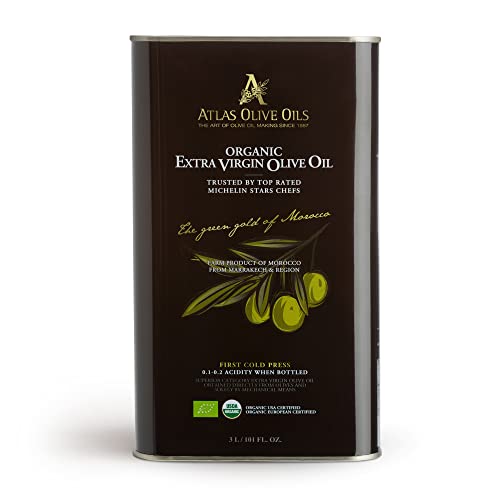
Atlas Organic Extra Virgin Olive Oil — 3 L Tin
For households that consume olive oil as their primary cooking fat, the three-liter tin is the most cost-efficient way to buy verified high-polyphenol oil. The opaque metal container provides excellent light protection and a seal that preserves freshness across the larger volume. Owner reviews call it the format that makes daily Atlas use financially realistic without downgrading quality.
- Pro: Lowest per-liter cost in the entire Atlas range, making premium polyphenol oil viable for high-volume use.
- Pro: Tin packaging offers the best UV and oxygen barrier of any option listed here.
- Con: The upfront cost is the highest single purchase price in the group, which can be a barrier to trying the brand for the first time.
Skip this if you are new to olive oil or uncertain you will use it daily — start with the 500 mL to test the flavor profile first.
Buying Guide
Packaging: Why the Container Matters More Than the Label
Olive oil’s most valuable compounds — polyphenols, tocopherols, and volatile aromatics — degrade when exposed to light and oxygen. Dark glass bottles, opaque tins, and bag-in-box formats dramatically slow this process compared to clear PET plastic. If a brand sells in a transparent jug, assume meaningful potency loss by the midpoint of a typical household’s consumption timeline. Choose the smallest volume you can use within six to eight weeks of opening, and prioritize packaging material over bottle count.
Origin Transparency: Single Country Versus Vague Blends
A label that names one country — Morocco, Greece, Italy — is materially different from one that says “packed in Italy” or “blend of EU and non-EU oils.” The former indicates the producer sourced from a defined terroir, making it far easier to trace harvest timing and chemical quality. In the list above, Atlas and Colavita name a single origin; the Amazon Grocery and Pompeian entries provide less specificity. Real olive oil brands that want your trust publish where the fruit was grown, not just where the bottle was filled.
Polyphenol Data: The Spec That Separates Marketing From Nutrition
Polyphenols are the compounds responsible for olive oil’s anti-inflammatory reputation and its peppery throat-burn. Few brands list a minimum polyphenol figure on the label because doing so invites scrutiny. Atlas is notable in this group for publishing a high-polyphenol claim tied to specific harvest data. If you are buying olive oil for its health properties rather than purely as a cooking medium, prioritize any brand that gives you a number — it signals accountability that most commodity oils do not attempt.
Our Verdict
Top pick: Atlas Organic Extra Virgin Olive Oil — 1 L. It balances verified polyphenol data, single-origin sourcing, and a protective dark glass bottle at a per-volume price that makes daily use realistic.
Budget pick: Amazon Grocery Extra Virgin Olive Oil — 51 Fl Oz. If you need a reliable cooking oil at the lowest per-ounce cost without leaving the extra virgin category, this bottle does the job.
Where another wins: If your household consumes more than two liters of oil per month, the Atlas 3 L Tin outperforms every other option on cost efficiency while maintaining the same quality tier as the 500 mL and 1 L bottles.
FAQ
How do I know if my olive oil is real and not adulterated?
Check for a single-country origin, a harvest date, and packaging that blocks light. Adulterated oils tend to be vague on sourcing, sold in clear plastic, and lack any supporting lab or polyphenol data. A genuine extra virgin oil should also produce a peppery sensation at the back of the throat when tasted raw.
Is more expensive always better when it comes to olive oil?
Not always, but meaningful quality markers — single origin, published potency ranges, protective packaging — do add cost. The jump from commodity blends to verified polyphenol oils is real. Within the premium tier, however, you can find good value by choosing larger formats from the same brand, as the Atlas 3 L Tin demonstrates.
Does cooking with olive oil destroy its health benefits?
High heat degrades some polyphenols, but studies show extra virgin olive oil remains chemically stable well below its smoke point. For low-to-medium heat sautéing and roasting, the health compounds survive. If you want to preserve maximum polyphenol intake, reserve a small amount of high-polyphenol oil for raw finishing rather than high-heat frying.
How long does opened olive oil stay fresh?
Most experts recommend using an opened bottle within six to eight weeks, and dark glass or tin packaging extends that window compared to clear plastic. If the oil smells waxy or flat before you finish the bottle, oxidation has progressed and the remaining polyphenols have degraded — replace it rather than push through to the last pour.