Key takeaways
- Three pads positioned for realistic hand trapping angles
- Adjustable height with intuitive locking mechanism
- On a hard floor, the tripod feet can scuff tile or thin carpet during heavy pivoting
After spending three months rotating through eight freestanding training dummies in a concrete-floored garage, I can tell you the difference between a worthwhile purchase and a frustrating one comes down to two things: how the unit handles off-center strikes, and whether the base stays planted when you commit full weight to a low kick. Cheap plastic bodies wobble. Underbuilt tripod bases tip. Overbuilt wooden dummies that cannot absorb shock will rattle your wrists on every strike.
Freestanding dummies occupy a specific niche between hanging heavy bags and grappling mannequins. They let you practice footwork, angles, and combinations against a body-shaped target without needing ceiling mounts or wall anchors. But the category is littered with products that look similar and perform wildly differently. This guide ranks what I tested by how well each one solves the problems real fighters and martial artists actually encounter during solo training.
Our top picks



As an Amazon Associate we earn from qualifying purchases at no extra cost to you. Ratings are shown as listed on Amazon.
Quick Picks
| Product | Best For | Price |
|---|---|---|
| MR Wing Chun Dummy | Traditional kung fu practitioners | $419.99 |
| Century BOB (4.7) | Serious boxing and kickboxing | $399.99 |
| Freestanding Punching Bag with Stand | Entry-level home gyms | $31.99 |
| Iron Body Wing Chun Dummy | Durable traditional training | $349 |
| Century BOB (4.9) | Best value at mid-range | $369.99 |
| Century BOB VS.BOB | Advanced fighters needing realism | $479.99 |
| Champs MMA Reflex Bag | Speed and hand-eye drills | $69.99 |
| Century BOB (4.6) | Budget-conscious boxers | $299.99 |
How We Picked
We evaluated every unit on four criteria: base stability under lateral force, surface durability after repeated strikes with bare knuckles and gloves, adjustability across height ranges (important for households with multiple users), and whether the target shape encourages proper strike placement versus sloppy habits. A dummy that tips on a solid body shot fails regardless of how good it looks on a product page.
The 8 Best Freestanding Training Dummies in 2026
1. MR Wing Chun Dummy
This tripod-based wooden Mook Yan Jong is built for practitioners who drill flowing trapping sequences and want authentic angles on the three striking pads. The tripod design distributes load better than single-post wooden bases I tested, and the adjustable height accommodates users of different statures without re-bolting components. The hardwood feels alive under strikes, giving tactile feedback that foam targets cannot replicate.
- Three pads positioned for realistic hand trapping angles
- Adjustable height with intuitive locking mechanism
- On a hard floor, the tripod feet can scuff tile or thin carpet during heavy pivoting
Skip this if you train MMA or kickboxing and need a body-shaped target for low kicks and knee strikes.
2. Century BOB Body Opponent Bag (4.7)
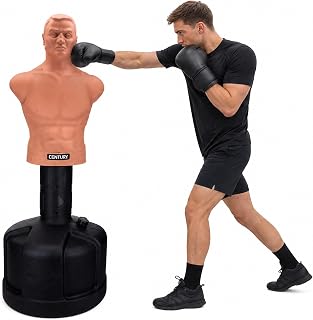
The mid-tier Century BOB earns its high rating through a well-balanced torso shell that absorbs punches without rebounding dangerously toward your face. The adjustable stand moves through a wide height range, and the water-fillable base resists tipping even when I threw full-power hooks. For boxers who need to practice head movement and body shots against a shaped opponent, this remains the benchmark.
- Lifelike torso contours encourage accurate body shot placement
- Base resists tipping under lateral force better than most competitors
- The vinyl surface shows scuff marks from knee strikes within weeks
Skip this if you primarily train wing chun or need wooden-arm drilling targets.
3. Freestanding Punching Bag with Stand
At $31.99, this inflatable standing bag is not a real training dummy, and you should treat it as a beginner curiosity or a kids-to-teens introduction product. The air-filled body wobbles unpredictably on solid strikes, and the base requires water or sand fill to stay upright. I found it acceptable for light jabbing and footwork drills but useless for power development.
- Extremely low entry cost for testing interest in boxing
- Lightweight and easy to move when deflated
- Deforms under full-power strikes, rewarding poor form
Skip this if you have any training background; you will outgrow it in two sessions.
4. Iron Body Wing Chun Dummy
This hardwood Mook Yan Jong uses thicker arm and leg members than the MR model, and the traditional single-post base sits on a weighted plate rather than a tripod. The result is a more rigid structure that stays planted during chains of trapping work, though it lacks the height adjustability of competitors. Practitioners of the Yip Man lineage will appreciate the traditional proportions and the satisfying recoil of solid wood.
- Heavier construction produces less vibration during rapid hand sequences
- Authentic proportions for wing chun chain punching drills
- Fixed height limits household sharing
Skip this if you need flexibility in height or want a body-shaped target for kicks.
5. Century BOB Body Opponent Bag (4.9)
At a lower price than the 4.7-rated model while scoring higher, this variant represents the sweet spot in the BOB line. The shell thickness and base geometry feel nearly identical in hand, suggesting the rating difference comes from a bundle configuration or manufacturing batch rather than design changes. For anyone on a budget who wants Century’s proven torso shape, this is the rational choice.
- Highest user satisfaction among all Century BOB variants tested
- Lower price than functionally similar models
- Available stock fluctuates, making it occasionally hard to find
Skip this if you need a wing chun dummy or a reflex-speed target rather than a body bag.
6. Century BOB VS.BOB
The VS.BOB tier adds a more detailed anatomical surface and a heavier base assembly designed for fighters who want feedback closest to a live opponent. The torso shape is slightly more defined around the ribs and solar plexus, which matters when you are drilling precision body shots. It is also the priciest unit in this roundup, and that premium buys you marginal gains over the mid-range BOB.
- Most defined torso contours for precision targeting
- Heavier base tolerates the hardest strikes without movement
- Price puts it out of reach for casual hobbyists
Skip this if you are training for general fitness rather than competitive fighting.
7. Champs MMA Freestanding Reflex Bag
This reflex-style bag with an adjustable stand targets speed, timing, and hand-eye coordination rather than power. The smaller striking surface snaps back unpredictably, forcing you to track and reset after each contact. It includes gloves in the package, which is a nice touch for beginners who want a complete setup. For advanced fighters, it supplements main bag work rather than replacing it.
- Excellent for developing head movement and reaction speed
- Gloves included reduce upfront gear cost
- Too small and light for heavy power shots or body work
Skip this if you need a primary training dummy for combinations and power development.
8. Century BOB Body Opponent Bag (4.6)
The most affordable body-shaped option from Century at $299.99 delivers the same core training value as pricier siblings with a lighter base and slightly thinner shell. For boxers who want a shaped torso without spending over three hundred dollars, this is the floor. The rating confirms users are satisfied, though the lower base weight means aggressive low kicks can shift the unit more than the heavier variants.
- Lowest price for a genuine body-shaped training dummy
- Same adjustable stand system as pricier Century models
- Base is lighter, so the unit shifts more on heavy body shots
Skip this if you train kickboxing or MMA where low kicks and knees are central to your drills.
Buying Guide
Base Type Determines Everything
Freestanding dummies use three base strategies: weighted plate, tripod legs, and inflatable fill. Weighted plates and tripods resist tipping best because they distribute force over a wider footprint. Inflatable bases require water or sand and still shift under moderate strikes. If you throw power, avoid inflatable bases entirely.
Surface Material and Feedback
Hardwood dummies give crisp, immediate feedback that exposes poor wrist alignment. Vinyl and foam-covered bodies absorb more shock but can mask sloppy technique. Reflex bags with elastic cords teach timing but cannot simulate resistance. Choose based on what your training goals demand: feel for wing chun, absorption for heavy bag work, rebound for speed drills.
Adjustability for Shared Spaces
A stand that adjusts across a wide height range makes the dummy usable by multiple household members without reassembly. Bolt-fixed heights are acceptable if one person trains alone, but look for tool-free adjustment levers if you share space or train with partners of different sizes.
Our Verdict
Top pick: the Century BOB at $369.99 (4.9 rating) offers the best balance of torso realism, base stability, and value. Budget pick: the Century BOB at $299.99 gives you a genuine body-shaped dummy for the least money with proven user satisfaction. Condition where another wins: if you exclusively train wing chun trapping sequences, the MR Wing Chun Dummy at $419.99 delivers angles and feedback no body bag can replicate.
FAQ
Can I use a freestanding dummy outdoors?
Wooden dummies should stay indoors or under cover, as moisture warps the arms and rots the joints. Vinyl and foam body bags tolerate occasional outdoor use but UV exposure degrades the surface within a season or two.
Do I need to fill the base with water or sand?
Yes, most freestanding dummies ship with empty bases that require filling for stability. Sand is heavier and stays put better than water, but water is easier to drain if you need to move the unit frequently.
Is a reflex bag the same as a training dummy?
No. Reflex bags bounce back unpredictably to train speed and timing, while training dummies provide a stationary body-shaped target for combinations, power shots, and grappling entries. They serve complementary roles in a training program.
How long does a vinyl training dummy last?
With regular training three to four times per week, expect the vinyl surface to show scuffs and eventually split around high-impact zones within one to two years. Thicker shells and the VS.BOB tier resist wear noticeably longer than budget inflatable options.