Key takeaways
- Weekly market vendor: Favor a commercial frame with replaceable roof fabric and parts. Aluminum saves carrying weight; steel may cost less but is heavier. Check that the canopy maker sells replacement tops and connectors.
- One or two backyard events a year: A recreational canopy is often the sensible choice. It may be lighter and cheaper, but should not be treated as a substitute for a commercial shelter in gusty or prolonged use.
- Food, craft, or information booth: A 10 × 10-foot canopy is the common event footprint. If you need tables, product displays, and room for visitors, consider a 10 × 15 or 10 × 20-foot model only after checking venue rules and transport space.
- Solo setup or long walks from parking: Prioritize packed weight and a wheeled bag, but plan for help unfolding the frame. “One-person setup” claims do not make a large canopy easy to handle in wind.
- Small car or limited storage: Measure the packed length as well as the weight. A canopy can fit in a closet yet fail to fit through a car’s trunk opening.
Best Pop-Up Event Tents: Quick Picks by Use
The best pop up event tents are commercial-grade, straight-leg canopies with a powder-coated steel or aluminum frame, a UV-resistant polyester top, and enough room for your setup—not simply the largest tent you can buy. For frequent vendor events, choose a 10-by-10-foot model with a sturdy frame and replaceable parts; for occasional gatherings, a lighter recreational canopy can be easier to carry and more affordable.
Below, the comparison focuses on practical trade-offs among familiar product lines: Eurmax’s commercial canopies, E-Z UP’s Eclipse and Pyramid models, and Coleman’s lighter recreational shelters. Specifications can vary by model and year, so confirm the exact listing before purchase, especially for weight, included sidewalls, and frame material.
Our top picks


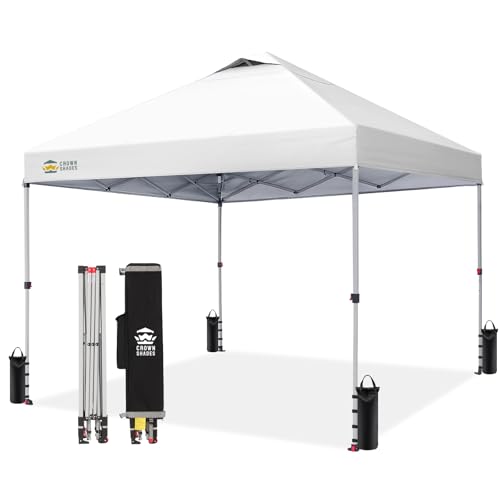

As an Amazon Associate we earn from qualifying purchases at no extra cost to you. Ratings are shown as listed on Amazon.
Comparison: Size, Weight, Setup, and Wind Readiness
| Type or example line | Common footprint | Approx. packed weight | Frame and setup | Best fit |
|---|---|---|---|---|
| Eurmax commercial canopy | 10 × 10 ft | About 45–60 lb | Steel or aluminum options; usually a two-person lift and lock-in setup | Regular vending and repeated event use |
| E-Z UP Eclipse | 10 × 10 ft | About 45–55 lb | Steel frame; telescoping legs and central roof mechanism | Vendors wanting a recognizable commercial-style setup |
| E-Z UP Pyramid | 10 × 10 ft | About 35–50 lb | Aluminum frame; generally easier to carry than comparable steel models | Frequent transport where lower frame weight matters |
| Coleman recreational canopy | 10 × 10 ft | About 25–40 lb | Lightweight frame; typically designed for occasional, non-commercial use | Backyard gatherings and infrequent outings |
These are approximate ranges, not guarantees for every configuration. A rolling bag, sidewalls, stakes, and upgraded frame can change the total. “10 × 10” usually describes the roof footprint; the legs may sit slightly inside that area, and the usable shaded area can be smaller depending on the roof shape.
Choose by Event Situation
- Weekly market vendor: Favor a commercial frame with replaceable roof fabric and parts. Aluminum saves carrying weight; steel may cost less but is heavier. Check that the canopy maker sells replacement tops and connectors.
- One or two backyard events a year: A recreational canopy is often the sensible choice. It may be lighter and cheaper, but should not be treated as a substitute for a commercial shelter in gusty or prolonged use.
- Food, craft, or information booth: A 10 × 10-foot canopy is the common event footprint. If you need tables, product displays, and room for visitors, consider a 10 × 15 or 10 × 20-foot model only after checking venue rules and transport space.
- Solo setup or long walks from parking: Prioritize packed weight and a wheeled bag, but plan for help unfolding the frame. “One-person setup” claims do not make a large canopy easy to handle in wind.
- Small car or limited storage: Measure the packed length as well as the weight. A canopy can fit in a closet yet fail to fit through a car’s trunk opening.
What Matters More Than the Roof Size
Frame material and setup time
Steel frames are usually less expensive, but their weight adds up when you carry the tent, weights, walls, and merchandise together. Aluminum frames reduce that burden and resist rust, though they can cost more and still bend if overloaded or handled roughly. In either material, inspect joints, sliders, leg locks, and the central hub: these moving parts take the most abuse during repeated setup.
A practiced pair of adults may open a standard pop-up frame and attach the top in roughly 5–10 minutes. Allow longer on a first setup, on uneven ground, or when adding walls. Unfold the frame only partway before securing the canopy fabric, then extend the legs. Forcing a stuck slider or dragging a partly opened frame can damage joints and pinch fingers.
Wind resistance, anchoring, and sidewalls
“Wind resistant” is not a universal performance rating. Manufacturers may publish different limits, and a stated limit does not account for gusts, wet ground, roof condition, or a sidewall acting like a sail. Use the venue’s rules, follow the canopy maker’s instructions, and take the roof down if conditions become unsafe. No pop-up canopy should be assumed safe in storms or strong, shifting winds.
Anchor each leg with a suitable weight or stake system, even on a calm day. On pavement, use purpose-built leg weights; on soil, use stakes where permitted, ideally alongside weights when conditions warrant. Do not rely on thin supplied stakes alone for a vendor setup. Keep tie-downs attached as directed and avoid anchoring to vehicles, tables, or objects that can move.
Sidewalls provide shade, privacy, and some protection from light rain, but they also catch wind. A wall on the windward side can increase uplift and sideways force. Use only compatible panels, secure every attachment point, and remove walls or lower the canopy when gusts rise. Check whether walls are included: many listings show them in photos but sell them separately.
Measure the Real Setup Before Buying
A 10 × 10-foot roof covers 100 square feet in plan, but that is not the same as comfortable working space. A six-foot table is about 2 feet deep; placing one along the back of a booth leaves roughly 8 feet of depth before allowing for legs, displays, and a visitor aisle. Add a second table or sidewall and the usable area shrinks quickly.
Also measure the full clearance needed around the canopy. Event organizers may count guy lines, weights, or roof overhang within your assigned space. Confirm the permitted footprint, overhead clearance, and fire-safety requirements before ordering; a larger tent can be less useful if it does not fit the booth allocation.
Ownership Costs and Common Failure Points
Budget for more than the canopy itself. General market prices range from roughly $100–$250 for many recreational models to $250–$800 or more for commercial-grade options, with larger sizes, aluminum frames, printed roofs, walls, and weights raising the total. A complete vendor setup can cost substantially more once you add ballast, sidewalls, transport, and replacement fabric.
The roof fabric often wears first at corners, seams, and points where it rubs against the frame. Frame damage commonly starts at sliders, locking buttons, and joints—especially when a canopy is opened against resistance or left up unattended. After an event, dry the fabric fully before storage to reduce mildew, brush off grit, and check for bent parts before the next setup. Store the frame in its bag without forcing it; a bag that barely closes is a warning that the canopy is packed incorrectly or the frame is misaligned.
Bottom Line
For frequent outdoor events, start with a commercial 10 × 10-foot canopy from a line such as Eurmax or E-Z UP, then choose steel for lower purchase cost or aluminum for easier transport. For occasional backyard shade, a lighter Coleman recreational model may be adequate. In every case, compare packed dimensions, included walls, available replacement parts, and anchoring requirements—not just the advertised footprint. The most useful tent is the one you can transport, set up correctly, and secure for the conditions at your event.