Key takeaways
- Pro: Thirty distinct modes cover TENS, EMS, and massage in one compact unit.
- Pro: Lowest price per mode in this comparison, making experimentation low-risk.
- Con: Included electrode pads degrade quickly, raising long-term replacement costs.
What's inside
A home TENS unit sits at an awkward intersection in the pain-management market: it is cheap enough to try without insurance involvement, yet sophisticated enough that the wrong choice wastes your money and your patience. The core promise is simple — electrical impulses delivered through adhesive pads reduce the perception of pain by interfering with nerve signaling. But the practical experience varies enormously depending on how many channels the device supports, whether intensity ramps in usable increments, and whether the included electrodes maintain consistent contact after a handful of uses.
What separates a unit you will reach for daily from one that dies in a drawer comes down to three things: control granularity (more levels mean you find your threshold without overshooting), electrode quality (cheap pads lose adhesion and cause uneven stimulation), and whether the power source suits your lifestyle. A rechargeable unit you forget to charge is a unit you stop using. Below, we compare eight machines that consistently appear in high-volume purchase data and positive owner feedback, all priced under $60.
As an Amazon Associate we earn from qualifying purchases at no extra cost to you. Product prices and availability are accurate as of the date shown and are subject to change.




Quick Picks
| Product | Best For | Price |
|---|---|---|
| AVCOO 3-in-1 (30 Modes) | Mode variety on a budget | $25.98 |
| AUVON 3-in-1 (40 Levels) | Graduated intensity control | $35.99 |
| TENS 7000 Digital | Targeted pain relief with accessories | $38.88 |
| AUVON Dual Channel (20 Modes) | Simultaneous two-area treatment | $33.99 |
| Comfytemp 3-in-1 Rechargeable | Lowest entry price with USB power | $19.97 |
| AUVON 24 Modes Premium Pads | Electrode quality out of the box | $32.99 |
| TENKER 24 Modes Rechargeable | Pad value in a compact unit | $19.99 |
| TENS 7000 Rechargeable | Muscle recovery and growth | $59.99 |
How We Picked
We evaluated each unit across four criteria that consistently determine long-term satisfaction: intensity resolution (how many levels exist and whether the jump between them is tolerable), channel and mode architecture (whether the device can treat two areas at once and offer distinct waveforms), electrode supply and quality (pad size, quantity included, and adhesive longevity reported by owners), and power logistics (battery type, rechargeability, and real-world usage frequency). Price-to-feature ratio was the tiebreaker, not a starting assumption — a $20 unit that feels underpowered is not a bargain.
The 8 Best Home Tens Machines in 2026
AVCOO 3-in-1 TENS Unit Muscle Stimulator with 30 Modes
This is the entry point for anyone who wants multiple therapeutic modalities without committing significant cash. Thirty modes across TENS, EMS, and massage functions give you room to experiment with what actually reduces your discomfort. Owners praise the intensity ramp for feeling gradual despite the lower price tier. The main limitation is electrode quality; pads included in the box tend to lose adhesion faster than premium alternatives, meaning ongoing supply costs add up. Skip this if your pain is localized and you need maximum precision on a single channel rather than breadth across modes.
- Pro: Thirty distinct modes cover TENS, EMS, and massage in one compact unit.
- Pro: Lowest price per mode in this comparison, making experimentation low-risk.
- Con: Included electrode pads degrade quickly, raising long-term replacement costs.
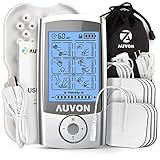
AUVON 3-in-1 TENS Unit Muscle Stimulator, 40 Levels
AUVON built its reputation on smooth intensity control, and this unit reinforces that with forty discrete levels — the most in our lineup. That granularity matters because the difference between “nothing” and “uncomfortable” is often one or two steps. The three-in-one design adds EMS and massage on top of TENS. Owners report consistent pad adhesion relative to the price, and the carry case keeps accessories organized. The con is that at $35.99, you are paying a modest premium over units with fewer levels but similar functionality. Skip this if your pain responds well to low settings and you do not need the full intensity range.
- Pro: Forty intensity levels provide the finest control of any unit here.
- Pro: Bundled carry case and reliable pad adhesion noted by owners.
- Con: Priced above functionally similar competitors for users who will stay under level 20.
TENS 7000 Digital TENS Unit with Accessories
The TENS 7000 has been a staple in pain-relief forums for years, and its appeal lies in simplicity: it does one thing (TENS) and does it with focused reliability. The included accessories package covers multiple body areas from lower back to shoulder, and owners consistently highlight how the two-channel design lets you treat bilateral symptoms simultaneously. The tradeoff is that there is no EMS or massage function, and the device runs on standard batteries rather than USB rechargeable. Skip this if you want multi-modality treatment or prefer the convenience of a rechargeable unit you can top off overnight.
- Pro: Long track record with focused TENS delivery and a generous accessory bundle.
- Pro: Dual-channel output for symmetrical pain areas like both knees or both shoulders.
- Con: Battery-powered only; no rechargeable option in this model.
AUVON Dual Channel TENS Unit Muscle Stimulator Machine with 20 Modes
Twenty modes sounds modest until you realize they are spread across a dual-channel architecture that includes both 2-inch and 2×4-inch pads in the box. That pad variety matters because small electrodes suit precise points (trigger points, wrists) while larger pads cover diffuse areas (lower back, quads). Owners appreciate the immediate readiness without purchasing additional sizes. The con is that this is not a 3-in-1 unit — no EMS or heat — so if you want muscle-strengthening stimulation alongside pain relief, look elsewhere. Skip this if your priority is mode count over electrode versatility.
- Pro: Both 2-inch and 2×4-inch pads included, covering precision and broad-area use.
- Pro: Dual-channel design allows independent intensity per channel for asymmetric pain.
- Con: TENS only; no EMS or massage functions bundled.
Comfytemp 3-in-1 TENS Unit Muscle Stimulator for Pain Relief, Rechargeable
At $19.97, this is the cheapest rechargeable 3-in-1 unit we found with meaningful owner feedback. The USB charging eliminates ongoing battery purchases, and the three modes (TENS, EMS, massage) cover the functional range most users need. Owners note the compact size is genuinely portable — it fits in a jacket pocket without bulk. The con is electrode longevity; pads tend to last fewer applications than AUVON’s offerings, and the intensity range feels slightly compressed despite the mode count. Skip this if you have a high pain tolerance or need the uppermost intensity levels.
- Pro: Lowest price in the lineup with USB rechargeability included.
- Pro: Genuinely pocketable form factor for travel and office use.
- Con: Pad adhesion life is shorter than premium-tier competitors.
AUVON 24 Modes TENS Unit Muscle Stimulator for Pain Relief, Premium Pads
The differentiator here is the pad quality. AUVON ships this unit with electrodes that owners report maintaining reliable contact across more sessions than the company’s own budget models. Twenty-four modes provide variety without overwhelming, and the intensity progression feels linear rather than jumpy. At $32.99 it sits in the middle of the price band, justified largely by the consumable savings — fewer replacements offset the upfront premium. The con is that the device itself is not rechargeable, so you are back to AA batteries or a proprietary pack depending on the revision. Skip this if rechargeability is non-negotiable for your routine.
- Pro: Premium electrode pads last noticeably longer, reducing ongoing costs.
- Pro: Smooth 24-mode progression with linear intensity steps.
- Con: Not rechargeable; ongoing battery cost or sourcing required.
TENKER 24 Modes TENS Unit Muscle Stimulator for Pain Relief, Rechargeable
TENKER undercuts every comparable 3-in-1 rechargeable unit by shipping eight electrode pads in the box at $19.99. That is the most generous pad count in our roundup, making it a strong choice for anyone who uses TENS on multiple body areas regularly. The 24 modes include TENS and EMS functions, and owners describe the device as straightforward to operate without reading the manual extensively. The con is that the unit lacks the polished interface of AUVON models — button feedback is less crisp, and the display is smaller. Skip this if you want the most refined user experience and do not mind paying slightly more for it.
- Pro: Eight pads included — best out-of-box value in the entire comparison.
- Pro: Rechargeable with no proprietary cables; standard USB.
- Con: Interface and display feel less refined than AUVON or TENS 7000 designs.
TENS 7000 Rechargeable Tens Unit Muscle Stimulator
This is the premium option and the only unit here positioned explicitly for muscle recovery and growth alongside pain relief. The rechargeable design fixes the main complaint about the original TENS 7000, and four electrode pads per channel support multi-area treatment without juggling. Owners who use it for post-workout recovery and period pain both report it delivers stronger stimulation than budget units without feeling harsh. The con is obvious: $59.99 is more than double the price of a Comfytemp. Skip this if your use case is purely pain relief and you do not need the additional intensity headroom for muscle stimulation.
- Pro: Rechargeable with the proven TENS 7000 platform behind it.
- Pro: Higher intensity ceiling supports both pain relief and muscle recovery applications.
- Con: At $59.99, it costs more than double the budget alternatives.
Buying Guide
Channel Count Determines Your Treatment Flexibility
A single-channel unit connects one pair of pads and treats one area. A dual-channel unit connects two pairs, letting you work both sides of your body or two separate pain sites simultaneously. Most home units in this price range are dual-channel, which is what you want unless your pain is strictly unilateral. Triple or quad channel exists in clinical settings but adds cost without practical benefit for self-treatment.
Intensity Resolution Matters More Than Mode Count
Thirty modes sounds impressive, but if the intensity jumps by large increments between adjacent modes, you will either under-stimulate or overshoot into discomfort. Forty levels (as on the AUVON 3-in-1) means each step is smaller and more tolerable. When comparing specs, look at total levels divided by modes — a unit with 40 levels and 30 modes offers finer per-mode control than one with 20 levels and 24 modes.
Electrode Supply and Power Source Define Real Cost
Adhesive electrodes are consumables. Most owners replace them every 20-30 sessions depending on skin oils and cleaning habits. A unit that ships with eight pads gives you months before you need to buy more. Similarly, a battery-powered unit that uses standard AAs is more convenient to source than one requiring a proprietary pack, but a USB-rechargeable unit eliminates that consideration entirely. Factor these into your actual cost of ownership over six months, not just the sticker price.
Our Verdict
The AUVON 3-in-1 with 40 levels is our top pick because it delivers the most usable intensity resolution in the lineup, a reliable pad system, and multi-mode coverage at a mid-range price. If your budget is the hard constraint, the Comfytemp 3-in-1 Rechargeable at $19.97 gets you 3-in-1 functionality with USB power and a genuinely portable form factor, though you will replace pads sooner. The TENS 7000 Rechargeable wins outright when your goal includes muscle recovery or strengthening alongside pain relief — no other unit here comfortably handles both tasks with the same intensity headroom.
FAQ
How long should I use a TENS unit per session?
Most manufacturers and physical therapists recommend 20-40 minutes per session, 2-3 times daily. Longer sessions are unlikely to cause harm but can produce skin irritation under the pads. Start at 15 minutes and build up to see how your body responds.
Can I use a TENS unit every day?
Daily use is common and generally safe for most adults. However, many clinicians suggest periodic breaks to prevent your nervous system from adapting to the stimulation, which can reduce perceived effectiveness over time. A schedule of five or six days per week with a rest day works well for most people.
Are there situations where I should not use TENS?
Do not use a TENS unit if you have a pacemaker or implantable defibrillator, over broken skin or inflamed areas, or across the front of the neck. Pregnant individuals should avoid abdominal and lower-back placement without medical guidance. When in doubt, clear use with your physician.
How often do I need to replace electrode pads?
Expect 20-40 uses per pair depending on skin preparation, storage, and adhesive quality. Rinsing pads gently under lukewarm water after each use and storing them flat in their protective film extends life. When adhesion drops and the unit reports a connection error or stimulation feels uneven, it is time to replace them.