Our Top Picks
 Yes4All Revolving Straight Bar with Non-Slip HandleStandard18 x 0.98 x 7.01 inches4.6 PoundsCheck on Amazon

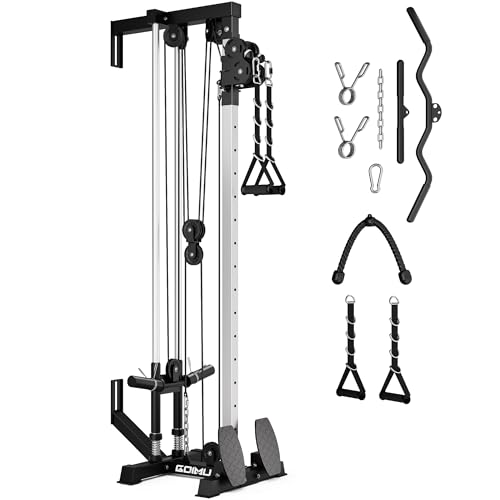
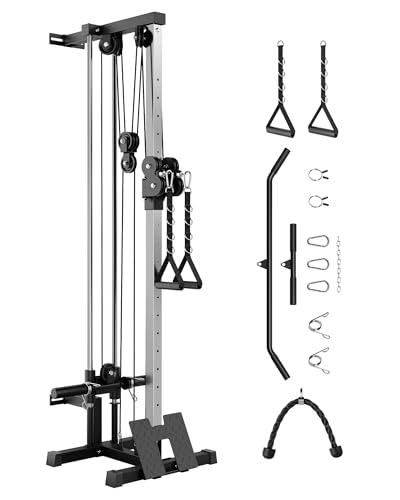


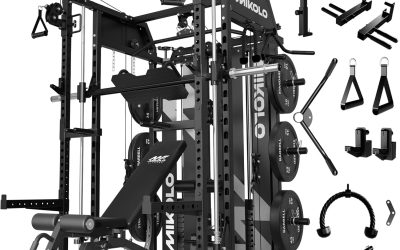
The best wall mounted cable machines with dual pulleys for most home gyms is the Mikolo Wall Mount Cable Station, a dual pulley crossover with 19 adjustable positions that lands in the mid-range price tier and covers nearly every cable movement a home lifter needs — crossovers, lat pull-downs, rows, face pulls and single-arm work — provided you have a dedicated wall section with roughly 8 ft of ceiling height and studs you can bolt into. If your budget is the binding constraint, the Goimu WM1 with 17 positions delivers the same dual-pulley crossover concept for less; if you want the smoothest hardware and the widest adjustment range in this roundup, the GOIMU WM2-V4 adds aluminum pulleys, an integrated weight stack and 33 adjustment points at a premium tier. The rest of this guide breaks down pulley adjustment, cable travel, resistance ratios, weight capacity, wall and ceiling clearance, mounting requirements and exercise versatility so you can match a station to your room, your training and your budget.
As an Amazon Associate we earn from qualifying purchases at no extra cost to you.
Top 3 Picks
Best Overall: Mikolo Wall Mount Cable Station
The Mikolo Wall Mount Cable Station is the most balanced package here: a true dual pulley crossover, 19 adjustable positions across the tower, and a mid-range price that sits well below the premium tier without dropping to entry-level hardware. It suits the lifter who wants one wall to handle both high-cable and low-cable work and does not want to rebuild a home gym around a full rack. Its 19-position range is the practical sweet spot for replicating most commercial cable exercises.
Best Budget: Goimu WM1 Wall Mount Cable Station
The Goimu WM1 pairs a dual pulley crossover with 17 adjustable positions and high/low cable configuration at the lowest tier in this roundup. You give up some adjustment granularity and premium pulley hardware compared with the mid-range and premium picks, but the fundamental exercise menu — crossovers, pull-downs, rows, curls and triceps work — remains intact. It is the right answer if you are outfitting a first home gym or a secondary training space.
Best Premium: GOIMU WM2-V4 Wall Mount Cable Station
The GOIMU WM2-V4 is the most feature-dense station here, combining aluminum pulleys, an integrated weight stack and 33 adjustment points. Aluminum pulleys matter because they run quieter and hold up better against cable wear than basic plastic or nylon units, and an integrated stack removes the need to hang plates on a loading pin. It suits buyers who train at home several times a week and want commercial-adjacent feel without a commercial footprint.
Quick Comparison
Every station below is a wall-mounted, dual-pulley design in the home-gym class. Price tiers are general market bands — budget, mid-range and premium — rather than fixed figures, because listing prices move constantly. Specs reflect what each product’s listing states; where a listing does not publish a figure, the spec is described by class rather than guessed.
| Product | Best For | Key Specs | Price Tier |
|---|---|---|---|
| Mikolo Wall Mount Cable Station | Most home gyms | Dual pulley crossover, 19 adjustable positions, wall-mount steel frame | Mid-range |
| Goimu WM1 Wall Mount Cable Station | Lowest-cost crossover | Dual pulley system, 17 positions, high and low cable crossover | Budget |
| Garvee Wall Mount Cable Machine | Cheapest dual-pulley entry | Dual pulley system, 19 positions, wall-mount design | Budget |
| VEVOR LAT Pull Down Machine | Pull-down and row focus | 3-in-1 row and pull-down cable machine, wall-mount design | Budget |
| GOIMU WM2-V4 Wall Mount Cable Station | Premium crossover | Aluminum pulley, integrated weight stack, 33 adjustment points | Premium |
| Valor Fitness Wall Mounted Cable Machine Bundle | Complete attachment kit | Dual adjustable pulley system, LAT attachment accessories included | Premium |
| Garvee Wall-Mounted LAT Pulldown & Cable Machine | High-capacity mid-range | Dual pulley system, 20 height settings, 400 lb capacity | Mid-range |
| Dashuho Wall Mounted Cable Station | Crossover plus LAT work | Dual pulley system, multi-functional crossover, LAT pull-down | Mid-range |
| GMWD Cable Machine Home Gym | Dual swivel arm training | Dual swivel arms, 22 adjustable positions | Premium |
| AOWINNOX Fitness Wall Mount Cable Crossover Machine | Entry-level crossover | Multi-functional dual pulley system, wall-mount home gym unit | Budget |
| Mikolo Folding Squat Rack with Cable Crossover | Rack and cable hybrid | Folding wall-mount power rack, cable crossover, LAT pull-down | Premium |
| ER Kang Cable Station Wall Mount | Compact pulley tower | 18 in pulley tower, dual pulley system, high and low cable, LAT pull-down | Mid-range |
How We Chose
This roundup is research-based. We compared published product listings, manufacturer specification sheets and category norms for wall-mounted cable equipment; we did not test, benchmark or own any of these machines, and nothing here should be read as a performance claim from direct use.
Our first filter was category fit: every product had to be a wall-mounted cable machine with a dual pulley system, because that configuration is what makes a crossover, a lat pull-down and a low row possible from one footprint. Our second filter was adjustment range — the number of positions and how they are distributed across the tower, since that determines whether you can reproduce a movement at the exact angle you want. Our third was structural honesty: does the listing state a weight capacity, a pulley material, a mounting method or a footprint, or does it stay vague?
We then weighed upgrade path and ownership reality. A station with an integrated stack, aluminum pulleys and a wide position count costs more but tends to need less retrofitting later. A budget tower with a loading pin and 17 positions gets you training sooner and leaves room to add attachments. Finally, we mapped each product to a specific reader situation — small room, low ceiling, high-volume training, tight budget, or wanting a rack and cable station in one — so the picks below read as decisions rather than a list.
1. Mikolo Wall Mount Cable Station – Best for Most Home Gyms
As an Amazon Associate we earn from qualifying purchases at no extra cost to you.
The Mikolo Wall Mount Cable Station is the pick we would hand to a typical home lifter building a single-wall gym. It is a cable crossover machine built around a dual pulley system with 19 adjustable positions, which is enough granularity to set a high cable for lat pull-downs and face pulls, drop to mid-height for chest-level crossovers, and run low for rows and curls without reconfiguring hardware. The 19-position range sits at the upper end of the mid-range field without climbing into premium pricing, which is why it earns the overall nod rather than a category award.
Who it suits: someone with a spare 4-6 ft of wall, studs at standard spacing, and roughly 8 ft of ceiling. It is a strong fit for lifters who train three to five times a week and want cable work — pushdowns, crossovers, single-arm rows, rear delt work — to sit alongside free weights rather than replace them. It is a weaker fit for someone who needs a full rack, a Smith machine or a leg press from the same footprint.
Key Specs
- Pulley system: dual pulley cable crossover
- Adjustment range: 19 adjustable positions
- Mounting: wall-mounted frame; requires structural stud attachment
- Loading: plate-loaded cable ends in the home-gym class — confirm the loading method on the current listing
- Footprint: wall-hugging; the working depth extends forward of the wall by the length of your cable path
- Best ceiling class: standard residential 8 ft ceiling with clearance for overhead cable travel
Strengths
The headline strength is balance. A 19-position tower is adjustable enough that you rarely feel you are “making do” with a fixed angle, and a dual pulley crossover means both arms can work independently or together. Independent arms are what separate a real crossover from a single-stack pulley: you can run alternating single-arm rows, unilateral crossovers and rotational work without a second machine. The mid-range tier also means you are typically getting steel frame construction and a more substantial pulley housing than the entry-level units in this list.
Where it stands out against the budget options is durability headroom. Cheaper stations often use small-diameter pulleys and thinner cable sheathing; the mid-range class generally steps up to better hardware, which matters because cable and pulley wear is the first thing to degrade on any wall-mounted station.
Pros
- 19 adjustable positions — the most useful range in the mid-range tier
- Dual pulley crossover enables unilateral and alternating work
- Mid-range price for a genuine two-arm cable station
- Wall-mount footprint leaves the floor open for a bench or rack
- Covers high, mid and low cable angles from one tower
Cons
- Requires solid structural mounting — no wall, no machine
- Ceiling clearance matters if you plan overhead cable work
- Plate loading and attachments are typically sold separately unless bundled
- Not a substitute for a rack if you squat or bench heavy
How It Compares
Against the Goimu WM1, the Mikolo costs more but adds two adjustment positions and typically a sturdier frame — the WM1 is the value play, the Mikolo is the long-haul play. Against the GOIMU WM2-V4, the Mikolo gives up aluminum pulleys, an integrated weight stack and a much wider 33-point adjustment range, but it also costs substantially less. If you load plates and want a crossover without stack maintenance, the Mikolo is the more efficient purchase; if you want the smoothest hardware and the widest range, step up to the WM2-V4.
2. Goimu WM1 Wall Mount Cable Station – Best Budget Dual Pulley Crossover

The Goimu WM1 is the entry point to a genuine dual pulley crossover. Its listing describes a wall-mount cable crossover machine with 17 positions and both high and low cable capability, which is the same functional concept as the mid-range and premium stations here at the lowest price tier in the roundup. If the Mikolo’s price is out of reach but you still want two independent pulleys rather than a single fixed stack, this is the machine to look at first.
Who it suits: first-time home gym builders, renters who want a compact wall footprint, and lifters who train two to four times a week and treat cable work as an accessory to dumbbells and a barbell rather than the centerpiece of a program. It also suits a garage or basement corner where you want cable variety without committing floor space to a full tower with a stack.
Key Specs
- Pulley system: dual pulley system
- Adjustment range: 17 positions
- Cable configuration: high and low cable crossover
- Mounting: wall-mounted; structural stud attachment required
- Loading: plate-loaded in the home-gym class — verify the loading pin arrangement on the listing
- Footprint: wall-hugging, similar working depth to other crossover towers
Strengths
The WM1’s value proposition is that 17 positions is still a lot. The difference between 17 and 19 positions is rarely the difference between being able to do an exercise and not being able to do it — it is a difference in how precisely you can match a commercial machine’s angle. For crossovers, pull-downs, rows, pushdowns, curls and face pulls, 17 positions is plenty. The high/low cable arrangement means the tower can anchor a lat pull-down above and a seated row below, which is the core of what most people buy a wall station for.
As a budget-tier unit, the practical trade-off is hardware rather than function. Budget stations typically use smaller-diameter pulleys and standard cable sheathing, which run a little louder and wear a little faster than aluminum pulleys. That is a maintenance consideration rather than a dealbreaker, and it is the reason we flag cable inspection as routine ownership rather than a repair.
Pros
- Lowest-cost route to a true dual pulley crossover
- 17 adjustable positions covers every mainstream cable exercise
- High and low cable anchors from a single wall unit
- Compact wall footprint suits small rooms and garages
- Leaves budget room for attachments, plates and a bench
Cons
- Fewer positions than the mid-range and premium picks
- Entry-level pulley hardware runs louder and wears sooner
- No integrated weight stack — you supply plates
- Frame rigidity is a class below premium stations under heavy loading
How It Compares
Against the Garvee Wall Mount Cable Machine, the WM1 gives up two adjustment positions (17 versus 19) but sits in the same budget tier, so the decision usually comes down to current pricing, published capacity figures and which mounting pattern suits your studs. Against the Mikolo Wall Mount Cable Station, the WM1 is the budget-first choice and the Mikolo is the upgrade — you pay more for two extra positions and generally heavier construction. If you are confident you will still be using the machine in five years, the Mikolo is the more efficient long-run buy; if you want to start training next weekend at minimum cost, the WM1 gets you there.
3. Garvee Wall Mount Cable Machine – Best for Maximum Positions on a Budget

The Garvee Wall Mount Cable Machine is the budget-tier option that does not cut the position count. Its listing describes a wall-mount cable machine with a dual pulley system and 19 positions — matching the mid-range Mikolo on adjustment range while staying in the budget band. For a buyer whose primary worry is “will I be able to hit the angle I want,” that combination is the most interesting spec sheet in the entry tier.
Who it suits: price-sensitive buyers who still want wide adjustability, and anyone building a gym where the cable station is one of several pieces rather than the only purchase. It also suits a lifter who already owns plates and attachments and just needs the tower.
Key Specs
- Pulley system: dual pulley system
- Adjustment range: 19 positions
- Mounting: wall-mount design; structural stud attachment required
- Loading: plate-loaded in the home-gym class
- Footprint: wall-mounted, floor stays clear
- Exercise class: crossover, pull-down, row, pushdown, curl, rear delt
Strengths
Nineteen positions at a budget price is the whole argument. Position count is the spec that determines whether a wall station feels like a real cable machine or a compromise, because each position is a different exercise angle. With 19 stops you can set a high anchor for lat pull-downs, a slightly lower one for face pulls, a chest-height setting for crossovers, a hip-height setting for woodchops and a low setting for rows and curls, and you can move between them in seconds.
The dual pulley layout also means independent arm travel. That is the difference between a crossover and a single-stack lat pull-down machine: independent pulleys let you work one arm at a time through a full range, which is useful for correcting side-to-side strength differences and for rotational and anti-rotational core work. Budget tier does not change that geometry.
Pros
- 19 positions at a budget-tier price
- Dual pulley system supports unilateral training
- Wall mount keeps floor space free for a bench or rack
- Broad exercise menu from a single anchor point
- Low entry cost leaves budget for plates and handles
Cons
- Budget-tier pulley and cable hardware
- No integrated stack — plates and a loading pin required
- Weight capacity should be confirmed against the current listing before heavy loading
- Frame finish and welds are typically a step below mid-range units
How It Compares
Against the Goimu WM1, the Garvee matches the budget tier and adds two adjustment positions, making it the stronger spec sheet on paper — but the WM1 is a known dual pulley crossover with a high/low configuration, so the tie usually breaks on current price and mounting fit. Against the Mikolo Wall Mount Cable Station, the Garvee matches the 19-position count but sits a tier lower on hardware and frame class, which is exactly where the price difference comes from. Buy the Garvee if positions-per-pound is your metric; buy the Mikolo if you want the same range with better hardware.
4. VEVOR LAT Pull Down Machine – Best for Pull-Down and Row Focus

The VEVOR LAT Pull Down Machine takes a different approach from the crossovers above: it is a 3-in-1 row and cable machine in a wall-mount design. Rather than centering the product on a wide crossover, it centers on the two movements most home lifters actually program — the lat pull-down and the seated row — and adds a third cable function on top. If your cable training is mostly back work, this is a more focused purchase than a full crossover tower.
Who it suits: lifters whose priority is vertical and horizontal pulling volume, and buyers with limited wall width who do not need two pulleys spread wide apart. It also suits a garage setup where a pull-down station needs to coexist with a rack or a bench along the same wall.
Key Specs
- Type: 3-in-1 row and cable machine
- Mounting: wall-mount design
- Primary movements: lat pull-down, seated row, plus a third cable function
- Pulley class: cable pulley system in the home-gym class
- Footprint: narrow wall-mounted profile
- Loading: plate-loaded in the home-gym class
Strengths
Focused design is a real advantage when it matches your program. A pull-down and row station puts the cable path exactly where those movements need it, with the anchor overhead for vertical pulling and low for horizontal pulling, and it does so with a narrower wall footprint than a wide crossover. That matters in a single-car garage bay or a basement corner where every inch of wall is contested.
The 3-in-1 framing also gives you a third cable station beyond the two headline movements, which in practice is usually used for triceps pushdowns, cable curls or face pulls. For a lifter running an upper/lower or push-pull-legs split, that covers the accessory work for every session without a second machine. It is a smaller investment than a dual crossover and it targets the highest-value cable movements first.
Pros
- Pull-down and row built in as the primary functions
- Narrow wall footprint suits tight spaces
- 3-in-1 configuration covers a third cable exercise
- Budget-tier pricing for a dedicated back-training station
- Simple, focused machine with fewer moving parts to maintain
Cons
- Not a wide dual crossover — less suited to chest fly and lateral crossover work
- Fewer published adjustment positions than the 19-position towers
- Budget-tier hardware and finish
- Independent-arm training is limited compared with a true dual pulley crossover
How It Compares
Against the Garvee Wall-Mounted LAT Pulldown & Cable Machine, the VEVOR is the simpler, lower-cost route to pull-down and row training, while the Garvee unit adds a dual pulley system, 20 height settings and a stated 400 lb capacity — a meaningful step up in both adjustability and rated loading. Against the Garvee Wall Mount Cable Machine, the VEVOR is the more specialized machine: better if back work is your priority, less versatile if you want to run chest crossovers and lateral work from the same tower. Choose VEVOR for focus and price, Garvee for range.
5. GOIMU WM2-V4 Wall Mount Cable Station – Best Premium Crossover

The GOIMU WM2-V4 is the most complete wall-mounted cable station in this roundup. Its listing describes a cable crossover machine with aluminum pulleys, an integrated weight stack and 33 adjustment points. Those three specs address the three things that most often disappoint buyers of budget towers: pulley smoothness, plate-hanging friction, and the feeling that the adjustment range runs out just before you reach the angle you wanted.
Who it suits: frequent trainees — four to six sessions a week — who want cable work to feel like a commercial gym, and buyers who would rather pay once than upgrade in two years. It also suits anyone who dislikes loading plates onto a pin for every set, since an integrated stack changes the setup time per exercise dramatically.
Key Specs
- Pulley material: aluminum pulley
- Weight system: integrated weight stack
- Adjustment range: 33 adjustment points
- Type: wall mount cable station / cable crossover machine
- Mounting: wall-mounted; structural attachment required
- Footprint: wall-hugging with forward cable working depth
Strengths
Aluminum pulleys are the headline hardware upgrade. They run smoother and quieter than basic plastic or nylon pulleys, and they resist the groove-wear that eventually causes cable fraying on cheaper units. Smoother pulleys also make light cable work — rear delt flyes, rotator work, high-rep pushdowns — feel far better, because the resistance curve is not fighting mechanical drag.
The integrated weight stack is the second major advantage. With a plate-loaded station you break your rhythm every set to add or remove plates; with a stack you pull a pin and go. Over a five-year ownership period at four sessions a week, that is roughly a thousand sessions of setup time saved. The 33 adjustment points then give you finer angular control than any other station in this list, which matters most for crossover angles, lateral raises and single-arm work where small changes in cable direction change the stimulus.
Pros
- Aluminum pulleys — smoother, quieter, longer-lasting than entry-level hardware
- Integrated weight stack eliminates plate loading between sets
- 33 adjustment points — the widest range in this roundup
- Premium build class suited to high-frequency training
- Strong exercise library: crossover, pull-down, row, curl, pushdown, lateral work
Cons
- Premium price tier — the highest investment per station here
- Weight stack requires a larger, heavier wall-mounted assembly
- Stack maintenance (cable tension, guide rod lubrication) becomes part of ownership
- Overkill if you train cable work once or twice a week
How It Compares
Against the Mikolo Wall Mount Cable Station, the WM2-V4 upgrades all three key specs — pulley material, loading method and position count — at a higher price, so the decision is frequency-driven: if cable work is central to your programming, the premium is easy to justify. Against the GMWD Cable Machine Home Gym, the WM2-V4 offers more adjustment points (33 versus 22) while the GMWD counters with dual swivel arms, which change the geometry of the cable path rather than the height of the anchor. If your priority is angle precision, take the WM2-V4; if your priority is freedom of cable direction, look at the GMWD.
6. Valor Fitness Wall Mounted Cable Machine Bundle – Best Bundle with Attachments

The Valor Fitness Wall Mounted Cable Machine Bundle is the package play: a wall-mounted dual adjustable pulley system sold with LAT attachment accessories included. Buying a bundle changes the economics of a home cable station, because the handles, bars and attachments you need to actually train are the hidden cost of a bare tower — a crossover alone will not do much without a straight bar, a rope, single handles and a lat bar.
Who it suits: buyers who want to mount once and start training immediately, and anyone who has priced attachments individually and realized the total approaches the cost of the tower itself. It also suits lifters who want a known fitness brand’s ecosystem rather than an unbranded accessory set.
Key Specs
- Pulley system: dual adjustable pulley system
- Mounting: wall mounted
- Included: LAT attachment accessories
- Configuration: dual pulley crossover with lat pull-down capability
- Loading: plate-loaded in the home-gym class
- Price tier: premium
Strengths
The bundle removes a genuine friction point. A bare wall tower plus a lat bar, a straight bar, a rope, a pair of single handles and a carabiner set can easily run into meaningful extra spend, and buying them piecemeal means multiple orders and compatibility guessing. A bundle guarantees the attachments fit the cable ends and the pulley housing, which is not trivial — cable-end fittings vary, and mismatched hardware is one of the most common frustrations reported by home gym owners.
The dual adjustable pulley system also gives you independent arm travel, which is the core requirement for crossover work, unilateral rows and anti-rotation core training. Valor Fitness is an established name in home strength equipment, and this bundle is positioned as a complete wall-mounted cable solution rather than a component.
Pros
- LAT attachment accessories included — train on day one
- Dual adjustable pulley system for unilateral and crossover work
- Established fitness brand with a home-gym track record
- Wall mount preserves floor space
- Fewer compatibility surprises than buying attachments separately
Cons
- Premium tier pricing, partly driven by the included accessories
- Attachment selection is fixed — you get what the bundle specifies
- Plate loading rather than an integrated stack
- Fewer published adjustment positions than the 33-point premium pick
How It Compares
Against the GOIMU WM2-V4, the Valor bundle trades the integrated weight stack and 33 adjustment points for included accessories and a plate-loaded design — so if you already own plates and attachments, the WM2-V4 is the more efficient premium buy, while the Valor bundle wins for a first-time buyer starting from nothing. Against the Mikolo Wall Mount Cable Station, the Valor bundle costs more but removes the accessory shopping step entirely. If you want one order and one install, the bundle is the simpler path.
7. Garvee Wall-Mounted LAT Pulldown & Cable Machine – Best High-Capacity Mid-Range

The Garvee Wall-Mounted LAT Pulldown & Cable Machine is the mid-range station that publishes the numbers buyers care about: a dual pulley system, 20 height settings and a stated 400 lb capacity. That capacity figure is the standout — it places this unit at the top of the stated load ratings in this roundup and makes it the natural choice for stronger lifters who worry about out-training a lighter tower.
Who it suits: intermediate and advanced lifters who load heavy on pull-downs and rows, and anyone who wants a published capacity number before committing to a wall. It also suits buyers who want pull-down and row capability with a dual pulley crossover rather than a single-stack machine.
Key Specs
- Stated capacity: 400 lb
- Adjustment range: 20 height settings
- Pulley system: dual pulley system
- Mounting: wall-mounted LAT pulldown and cable machine
- Loading: plate-loaded in the home-gym class
- Price tier: mid-range
Strengths
A published 400 lb capacity changes how you can program. Heavy lat pull-downs, weighted rows and cable-based pulling for strength work all require a machine that will not flex or creep under load, and a stated rating gives you a defensible ceiling. Twenty height settings then covers the full vertical spread — high anchor for pull-downs, mid for crossovers and chest-height work, low for rows and curls — with enough stops to fine-tune.
The dual pulley configuration adds independent arm travel on top of that, so the machine is not limited to bilateral pulling. In practice that means you can run single-arm lat pull-downs, unilateral rows and rotational work from the same tower, which is a significant expansion of the exercise menu for a mid-range price. For a lifter who wants one wall station to carry both back volume and cable accessories, this is the most capable mid-range spec sheet here.
Pros
- 400 lb stated capacity — the highest published rating in this roundup
- 20 height settings across the full vertical range
- Dual pulley system enables unilateral pulling
- Mid-range pricing for high-capacity construction
- Purpose-built for lat pull-down and row training
Cons
- Plate-loaded rather than integrated stack
- Fewer adjustment points than the 33-point premium station
- Heavier construction places more demand on wall anchoring
- Positioning leans toward pulling rather than chest crossover work
How It Compares
Against the VEVOR LAT Pull Down Machine, the Garvee unit is the clear step up: dual pulleys instead of a 3-in-1 single-path design, 20 height settings, and a published 400 lb capacity versus a budget-tier build. Against the Mikolo Wall Mount Cable Station, the Garvee wins on stated capacity and height settings (20 versus 19) while the Mikolo is the more crossover-oriented machine. If your cable training is pull-dominant and you load heavy, take the Garvee; if you want balanced crossover capability, take the Mikolo.
8. Dashuho Wall Mounted Cable Station – Best for Crossover Plus LAT Work

The Dashuho Wall Mounted Cable Station is a multi-functional dual pulley crossover with lat pull-down capability, sitting in the mid-range tier. It targets the reader who wants one machine to cover both the chest-and-shoulder crossover work and the vertical pulling that a lat pull-down provides, without choosing between the two.
Who it suits: lifters running a balanced program who need crossover angles and pull-down volume from the same wall, and buyers who want a mid-range machine with a broad movement menu rather than a specialized pull-down station. It also suits anyone whose wall space allows only one tower.
Key Specs
- Pulley system: dual pulley system
- Type: multi-functional cable crossover machine
- Movements: crossover, lat pull-down, row, curl, pushdown
- Mounting: wall mounted
- Loading: plate-loaded in the home-gym class
- Price tier: mid-range
Strengths
The strength here is coverage. A dual pulley crossover gives you the horizontal and diagonal cable paths for chest flyes, rear delt work and lateral raises, while the lat pull-down capability gives you the vertical path for back width. Combining them means a single wall station can carry the accessory work for a push day, a pull day and a leg day, which is exactly the role a home cable machine should play.
Multi-functional crossovers also tend to have generous adjustment ranges by category, because the machine is designed to be repositioned constantly. That matters in practice: the difference between a good and a frustrating wall station is often how quickly and securely the pulley carriage moves between stops, and a machine designed around multiple movement patterns usually prioritizes that mechanism.
Pros
- Dual pulley crossover plus lat pull-down in one unit
- Mid-range tier with a broad movement menu
- Wall mount keeps the floor clear
- Covers chest, back, shoulder and arm accessory work
- Good fit for a one-tower home gym
Cons
- No published adjustment count comparable to the 33-point premium unit
- Plate-loaded design requires separate plates
- Mid-range hardware rather than aluminum pulleys
- Multi-function design can mean compromise on any single movement versus a specialist machine
How It Compares
Against the Garvee Wall-Mounted LAT Pulldown & Cable Machine, the Dashuho is the more crossover-oriented machine while the Garvee publishes a higher stated capacity and a defined 20-setting range — so heavy pullers should lean Garvee and balanced trainers should lean Dashuho. Against the ER Kang Cable Station, the Dashuho is the wider crossover and the ER Kang is the more compact 18 in pulley tower; if wall width is tight, the ER Kang fits where a full crossover will not.
9. GMWD Cable Machine Home Gym – Best for Dual Swivel Arm Training

The GMWD Cable Machine Home Gym is a wall-mounted cable machine built around dual swivel arms and 22 adjustable positions. Swivel arms are a meaningful design difference: instead of a pulley that only travels up and down a vertical track, the arm itself rotates, which changes the cable’s line of pull without changing the anchor height.
Who it suits: lifters who want cable direction freedom — rotational work, diagonal patterns, cross-body pulls and sport-specific movements — rather than purely vertical and horizontal paths. It also suits buyers who want premium-tier hardware and a wide adjustment range without committing to an integrated weight stack.
Key Specs
- Arm design: dual swivel arms
- Adjustment range: 22 adjustable positions
- Type: wall mounted cable machine for home gyms
- Mounting: wall-mounted; structural attachment required
- Loading: plate-loaded in the home-gym class
- Price tier: premium
Strengths
Swivel arms expand what a cable machine can do. On a fixed-track tower, the cable always pulls from a point on a vertical line; on a swivel-arm machine, you can rotate the arm inward for cross-body work, outward for wide flyes, and through intermediate angles for chop and lift patterns. Combined with 22 positions, that gives a very large number of effective cable directions from a single wall unit, which is the closest a home machine gets to a functional trainer’s range.
Twenty-two positions also sits above the mid-range field (17-20) without reaching the 33-point premium crossover, which is a sensible balance: enough stops to fine-tune, not so many that the mechanism becomes complex. For rotational athletes, golfers, tennis players and anyone doing rehab-style cable work under professional guidance, the swivel arm design is the differentiator that matters most.
Pros
- Dual swivel arms allow rotational and diagonal cable paths
- 22 adjustable positions — above the mid-range field
- Premium-tier build class
- Wall mount keeps floor space usable
- Broad functional range beyond standard crossover angles
Cons
- Premium price tier
- Swivel mechanisms add maintenance points over fixed tracks
- Plate-loaded, not an integrated stack
- Fewer adjustment points than the 33-point premium crossover
How It Compares
Against the GOIMU WM2-V4, the GMWD gives up the integrated weight stack and 11 adjustment points but gains swivel arms, which change cable direction rather than just anchor height. Those are different kinds of versatility: the WM2-V4 wins on vertical precision, the GMWD wins on angular freedom. Against the Mikolo Wall Mount Cable Station, the GMWD is the premium step up with three extra positions and a fundamentally more flexible pulley arm, at a higher price.
10. AOWINNOX Fitness Wall Mount Cable Crossover Machine – Best Entry-Level Crossover

The AOWINNOX Fitness Wall Mount Cable Crossover Machine is a budget-tier, multi-functional dual pulley system designed as home gym equipment. It is the lowest-commitment way into wall-mounted cable crossover training in this roundup, and it is aimed squarely at the buyer who wants the crossover movement pattern without premium hardware.
Who it suits: beginners, casual trainees and anyone testing whether cable work will stick before investing more. It also suits a second training space — a garage, a spare room or a rental — where a heavier premium install is not practical.
Key Specs
- Pulley system: multi-functional dual pulley system
- Type: wall mount cable crossover machine
- Use class: home gym equipment
- Mounting: wall mounted
- Loading: plate-loaded in the home-gym class
- Price tier: budget
Strengths
The dual pulley layout is the reason this machine is worth considering at all. Even at the entry tier, two independent pulleys mean you can perform crossovers, single-arm rows, unilateral pushdowns and rotational work — the movement patterns that justify a cable machine in a home gym. A cheaper single-stack machine would not give you that.
The budget tier also lowers the cost of being wrong. If you are not yet sure whether cable accessories will be a permanent part of your training, spending at the entry level and upgrading later is a rational path, and a wall-mounted unit leaves your floor plan unchanged when you eventually replace it. As with all entry-tier equipment, check the published capacity and mounting instructions carefully before loading heavy.
Pros
- Lowest-cost entry to dual pulley crossover training
- Wall mount suits small and rental spaces
- Supports unilateral and rotational cable work
- Low financial risk for a first cable machine
- Simple mechanism with fewer parts to maintain
Cons
- Entry-tier pulley hardware and cable sheathing
- Limited published adjustment detail compared with 19-33 position towers
- No integrated weight stack
- Lower load ceiling than mid-range and premium units
How It Compares
Against the Goimu WM1, the AOWINNOX is the wider-open entry choice, while the WM1 publishes a specific 17-position count and a high/low cable configuration — if a defined adjustment range matters to you, the WM1 is the more transparent spec sheet. Against the Garvee Wall Mount Cable Machine, the AOWINNOX is the lower-cost option and the Garvee the higher-spec budget machine with 19 positions. Choose AOWINNOX to spend as little as possible; choose Garvee to spend slightly more for a defined range.
11. Mikolo Folding Squat Rack with Cable Crossover – Best Rack and Cable Hybrid

The Mikolo Folding Squat Rack with Cable Crossover is the hybrid answer: a wall-mounted power rack that folds away, with a cable crossover machine and lat pull-down built in. It is a premium-tier product for a specific buyer — someone who wants to squat and bench in a rack and also wants cable work, without dedicating two separate wall sections or a large permanent footprint.
Who it suits: lifters in a garage or multi-use room who need to reclaim floor space between sessions, and anyone who would otherwise buy a rack and a cable tower separately. It is also a strong fit for a home gym that doubles as parking space.
Key Specs
- Type: folding wall-mounted power rack
- Cable system: cable crossover machine with lat pull-down
- Mounting: wall-mounted, folding design
- Function class: functional training / squat rack hybrid
- Loading: barbell and plate-loaded cable in the home-gym class
- Price tier: premium
Strengths
The folding design is the reason this product exists. A rack that swings back against the wall when not in use turns a two-car garage into a gym and back again, and the integrated cable crossover means you do not need a second wall anchor for pull-downs, rows and crossovers. For a lifter running a barbell-focused program with cable accessories, that combination covers nearly everything except machines and cardio.
Buying a hybrid also reduces total install work. One mounting job, one set of anchors, one structural assessment — rather than two separate installations at two wall locations. The trade-off is that hybrid products rarely match a dedicated rack for rack features or a dedicated crossover for pulley hardware, so the decision hinges on how much you value consolidation.
Pros
- Rack and cable crossover in one wall-mounted unit
- Folding design reclaims floor space between sessions
- Integrated lat pull-down
- One installation instead of two
- Suits multi-use garages and shared rooms
Cons
- Premium tier — the highest-cost path here
- Folding mechanism adds parts that need periodic inspection
- Cable hardware is unlikely to match a dedicated premium crossover
- Requires substantial structural mounting for rack-level loads
How It Compares
Against the Valor Fitness Wall Mounted Cable Machine Bundle, the Mikolo hybrid is the choice if you also need a rack; the Valor bundle is the choice if you already have one. Against the GOIMU WM2-V4, the WM2-V4 is the better pure cable station with an integrated stack and 33 adjustment points, while the Mikolo hybrid is the better all-in-one for a garage gym with limited space. If you are buying a rack anyway, the hybrid consolidates; if you already own a rack, the WM2-V4 is the sharper cable purchase.
12. ER Kang Cable Station Wall Mount – Best Compact Pulley Tower

The ER Kang Cable Station Wall Mount is built around an 18 in pulley tower with a dual pulley system, high and low cable capability and lat pull-down function, at a mid-range price. Its defining trait is compactness: an 18 in tower footprint fits wall sections where a full-width crossover would not.
Who it suits: small rooms, apartment gyms and narrow garage bays where wall width is the limiting factor. It also suits lifters who want high and low cable anchors plus lat pull-down from a tight installation rather than a wide, two-arm crossover spread.
Key Specs
- Tower size: 18 in pulley tower
- Pulley system: dual pulley system
- Cable configuration: high and low cable
- Functions: lat pull-down and cable work
- Mounting: wall mounted
- Price tier: mid-range
Strengths
Compact does not mean limited here. An 18 in tower with high and low anchors still gives you the two most-used cable paths: overhead for lat pull-downs, face pulls and triceps, and low for rows, curls and standing cable work. The dual pulley system preserves independent arm travel, so unilateral work remains available. For a room where a 4-6 ft crossover installation is impossible, this is the compromise that keeps cable training on the menu.
The mid-range tier also generally means better hardware than budget towers — more substantial pulley housings and cable sheathing, which is where longevity is decided. Because the tower is narrow, the wall loading is concentrated into a smaller mounting area, so correct anchoring into structural studs becomes even more important than on a wide crossover; that is a mounting consideration rather than a product flaw.
Pros
- 18 in tower fits narrow wall sections
- High and low cable anchors from one compact unit
- Dual pulley system supports unilateral training
- Lat pull-down capability built in
- Mid-range hardware in a small footprint
Cons
- Narrow spread limits wide crossover angles
- Concentrated wall loading demands solid anchoring
- No integrated weight stack
- Smaller adjustment range than the 19-33 position towers
How It Compares
Against the Dashuho Wall Mounted Cable Station, the ER Kang is the compact choice and the Dashuho the wider crossover — pick ER Kang when wall width is the constraint and Dashuho when you want full crossover geometry. Against the VEVOR LAT Pull Down Machine, the ER Kang adds a dual pulley system and high/low configuration at a mid-range price, while the VEVOR stays budget and focused on pull-down and row. If you want compactness plus independent pulleys, ER Kang is the better fit.
How to Choose
Wall-mounted cable machines look similar in photos and behave very differently in a room. The six variables below decide whether a station feels like a commercial machine or a compromise, and they matter more than brand name.
1. Pulley Adjustment: Count the Positions and Check the Mechanism
Position count is the most visible spec and the easiest to compare: this roundup runs from 17 positions (Goimu WM1) to 33 adjustment points (GOIMU WM2-V4), with 19, 20 and 22 in between. More positions means finer control over cable angle, which matters most for crossovers, lateral raises and rear delt work where a few degrees changes the stimulus.
But count is only half the story. Ask how the carriage locks: a pin-and-hole system is simple and reliable; a spring-loaded detent is faster but can wear; a friction collar is quickest but can slip under load. Also check whether you can adjust with one hand while holding a handle in the other — on a good station you can. And check the spacing between the top and bottom stops, because a 20-position tower with stops clustered in the middle is less useful than a 17-position tower spread evenly from floor to overhead.
2. Cable Travel and Resistance Ratio
Cable travel is how far the handle moves from full stretch to full retraction, and it determines which exercises the machine can support. A station with short cable travel cannot support a full-range lat pull-down or a deep single-arm row. Look for travel that lets you start with the arm fully extended overhead and finish with the handle at chest height for pull-downs, and travel that lets a seated row start with the arm extended and finish at the ribs.
Resistance ratio is the spec almost nobody publishes and everybody should understand. Most home cable stations run either 1:1 or 2:1. At 1:1, the load you hang is the load you feel: 100 lb of plates gives 100 lb of resistance at the handle. At 2:1, the cable passes over a moving pulley, so 100 lb of plates gives roughly 50 lb at the handle — but the cable pays out twice the handle distance. Worked example: if you want 30 in of handle travel on a 2:1 system, the cable must move 60 in, so the machine needs at least 60 in of cable travel available and enough vertical track for the carriage to move that far. If your station is 2:1 and you want to press heavy, you may need to load twice the weight you would on a 1:1 machine — which is why the stated weight capacity matters so much.
3. Weight Capacity and Loading Method
Capacity in this category ranges from unstated entry-tier ratings up to a published 400 lb on the Garvee Wall-Mounted LAT Pulldown & Cable Machine. Two things drive the number: the frame and anchoring, and the loading method.
Plate-loaded stations (most of this list) let you add any plates you own, which is flexible and cheap, but they require a loading pin and a plate horn, and every weight change is manual. Integrated stacks (the GOIMU WM2-V4) use selectorized weight, which is faster and cleaner but fixes your increments and adds stack maintenance — cable tension, guide rod lubrication, and eventually cable replacement.
A rough decision rule: if you change weight more than about six times per session, an integrated stack saves meaningful time. If you mostly run straight sets at one or two weights, plate loading is cheaper and more flexible.
4. Wall and Ceiling Clearance
Measure before you buy. The three numbers that matter:
- Stud spacing. In North American residential construction, wall studs are most commonly 16 in on center, with 24 in on center also common in older or garage construction. Your mounting plate has to land on studs, or you need a properly engineered backing board spanning them. Measure your actual spacing — do not assume.
- Wall width. A compact tower like the ER Kang Cable Station (18 in pulley tower) fits a narrow strip; a full dual crossover with independent arms needs a wider section, often 4-6 ft, to allow the arms to spread.
- Ceiling height. An 8 ft ceiling is the practical minimum for a wall cable station that includes lat pull-downs and overhead cable work. Below that, you lose the top of the cable path and pull-down range. Also account for the height of the top pulley housing plus the length of the lat bar and your reach.
Floor clearance matters too: leave at least 3 ft in front of the station so you can step back into a crossover or a row without hitting anything, and check that a bench fits under the high pulley if you plan to bench with cables.