Key takeaways
- Klipsch RP-8000F II: two 8-inch woofers and a horn-loaded tweeter prioritize sensitivity and dynamic impact.
- ELAC Debut 2.0 F6.2: its three-way arrangement uses multiple 6.5-inch drivers in a comparatively narrow cabinet.
- KEF R11 Meta: its Uni-Q coaxial array places the midrange and tweeter around the same acoustic center, which supports consistent imaging.
- Bowers & Wilkins 702 S3: the dedicated midrange and separate tweeter housing aim to keep vocals and instruments distinct from the bass system.
- Wharfedale EVO4.4: its three-way design and air-motion-transformer tweeter are intended to deliver broad, detailed high frequencies without relying on a conventional dome tweeter.
The best tower speakers for room-filling sound are the ones whose cabinet volume, driver arrangement, bass extension, sensitivity, and placement requirements match your room and amplifier—not simply the model with the largest woofer.
Our top picks
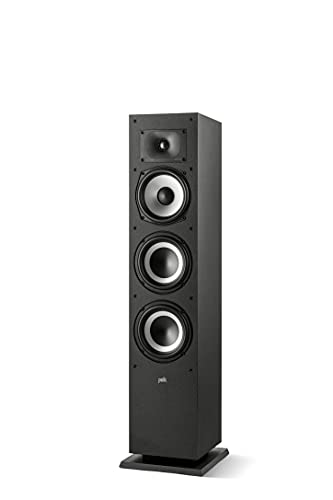

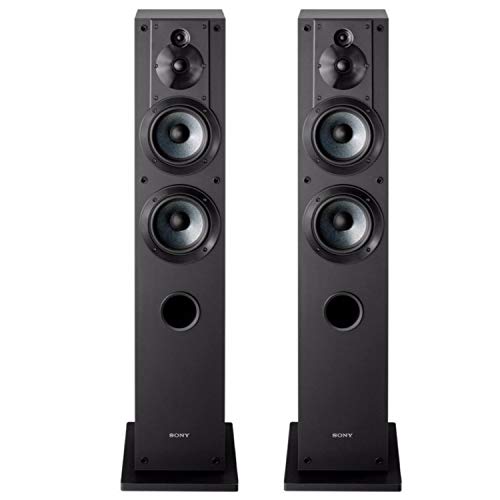

As an Amazon Associate we earn from qualifying purchases at no extra cost to you. Ratings are shown as listed on Amazon.
Quick picks by listening situation
| Situation | Best fit | Why it makes sense | Typical market range |
|---|---|---|---|
| Small to medium room, clean detail | ELAC Debut 2.0 F6.2 | Moderate cabinet size, three-way layout, and manageable amplifier load | About $500–$800 per pair |
| High-efficiency home theater or rock | Klipsch Reference Premiere RP-8000F II | Dual 8-inch woofers and high sensitivity produce substantial output without extreme amplifier power | About $1,000–$1,600 per pair |
| Balanced music listening in a medium or large room | Wharfedale EVO4.4 | Three-way design and AMT tweeter combine scale with a refined presentation | About $2,000–$3,000 per pair |
| Precise imaging and premium stereo | KEF R11 Meta | Uni-Q coaxial midrange/tweeter array gives consistent imaging across the listening area | About $5,000–$6,500 per pair |
| Detailed, spacious two-channel system | Bowers & Wilkins 702 S3 | Dedicated midrange, separate tweeter housing, and three bass drivers emphasize clarity and scale | About $4,000–$6,000 per pair |
These are general market ranges, not fixed prices. Finish, dealer promotions, regional taxes, and the release of newer generations can move pricing substantially.
What cabinet size really changes
A tower speaker’s cabinet is an acoustic working volume, not just furniture. A taller or deeper enclosure can accommodate larger woofers, longer ports, and more internal bracing. That usually helps bass output and reduces the need for a subwoofer, but it also increases the speaker’s sensitivity to room placement.
Compact towers such as the ELAC Debut 2.0 F6.2 are easier to position in apartments and smaller living rooms. Larger models such as the KEF R11 Meta and RP-8000F II can move more air, but their low-frequency energy may overwhelm a small, reflective room. A large cabinet placed close to a wall can sound less “powerful” and more boomy because room reinforcement adds energy unevenly.
Allow at least the speaker’s full width for clearance from nearby furniture. Also check the cabinet height and footprint against walkways, pets, children, and door swings. Floorstanding speakers are difficult to stabilize once their spikes or feet are installed, so measure before unpacking.
Driver layout: three-way versus two-and-a-half-way
Driver count alone does not determine quality. A two-and-a-half-way speaker may use one woofer across the full bass range and another that rolls off earlier. This can offer good output with a relatively simple crossover. A true three-way design assigns separate drivers to bass, midrange, and treble, potentially reducing the strain on the midrange driver at high volume.
- Klipsch RP-8000F II: two 8-inch woofers and a horn-loaded tweeter prioritize sensitivity and dynamic impact.
- ELAC Debut 2.0 F6.2: its three-way arrangement uses multiple 6.5-inch drivers in a comparatively narrow cabinet.
- KEF R11 Meta: its Uni-Q coaxial array places the midrange and tweeter around the same acoustic center, which supports consistent imaging.
- Bowers & Wilkins 702 S3: the dedicated midrange and separate tweeter housing aim to keep vocals and instruments distinct from the bass system.
- Wharfedale EVO4.4: its three-way design and air-motion-transformer tweeter are intended to deliver broad, detailed high frequencies without relying on a conventional dome tweeter.
Specifications that affect real-world use
| Model | Approx. height × width × depth | Approx. weight each | Driver layout | Published sensitivity | Published low-frequency extension |
|---|---|---|---|---|---|
| ELAC Debut 2.0 F6.2 | 43.1 × 8.3 × 10.8 in | 44 lb | 3-way, three 6.5-inch drivers | 87 dB | 39 Hz |
| Klipsch RP-8000F II | 43.1 × 10.9 × 18.2 in | 54 lb | 2-way, dual 8-inch woofers | 98 dB | 34 Hz |
| Wharfedale EVO4.4 | 41.7 × 9.8 × 13.4 in | 67 lb | 3-way, triple 6.5-inch bass/mid drivers | 89 dB | 38 Hz |
| Bowers & Wilkins 702 S3 | 43.3 × 10.2 × 15.8 in | 65 lb | 3-way, triple 6.5-inch bass drivers | 90 dB | 46 Hz |
| KEF R11 Meta | 53.5 × 6.9 × 15.3 in | 78 lb | 3-way, four 6.5-inch bass drivers plus Uni-Q array | 90 dB | 30 Hz |
Dimensions and specifications can vary slightly by region, grille, feet, or measurement method. Published low-frequency figures are not directly comparable to an in-room measurement. A speaker rated to 30 Hz may not deliver the same bass level or texture as another speaker with the same number.
Bass response and amplifier requirements
Deep bass is only useful when the room, amplifier, and placement can support it. The KEF R11 Meta reaches deepest on paper among these choices, while the Klipsch RP-8000F II offers unusually high sensitivity. Sensitivity matters because a 98 dB speaker needs far less amplifier power for a given listening level than an 87 dB speaker.
As a simplified example, increasing output by 10 dB requires approximately ten times the amplifier power when all other variables stay constant. A speaker rated at 98 dB can therefore reach a target level with much less power than one rated at 88 dB. This does not mean the Klipsch is automatically better; it means it is more forgiving of modest receivers and more capable of high peak output.
For most of these speakers, a quality integrated amplifier or AV receiver rated around 50–150 watts per channel is a sensible starting range, depending on room size and listening level. The KEF R11 Meta has a nominal 4-ohm load and benefits from an amplifier with a stable power supply. Do not choose an amplifier by wattage alone: current capability, impedance stability, ventilation, and clean operation at the intended volume matter more.
How far should tower speakers be from the walls?
Begin with the front of each speaker about 24–36 inches from the wall behind it. Rear-ported speakers generally need more breathing room than sealed cabinets, although the exact requirement depends on the port tuning and the room. If bass sounds thick, move the speakers farther out in 6-inch increments. If the presentation sounds thin, move them closer in small increments.
- Place the speakers symmetrically, with equal distances to the side walls.
- Start with 6–8 feet between the tweeters and form an approximate triangle with the listening position.
- Use modest toe-in, aiming each speaker just behind the listener’s head.
- Listen for centered vocals and even bass before changing tone controls.
- Mark the best position with removable tape, then secure the feet or spikes.
In a narrow room, side-wall reflections may dominate before the speaker reaches its maximum capability. In that situation, the narrower ELAC or KEF cabinet may be easier to integrate than a deeper model. In a large open-plan room, the extra cone area of the Klipsch, Wharfedale, KEF, or Bowers & Wilkins can help maintain scale at the seating position.
Ownership details people often overlook
Speaker cabinets require little routine maintenance, but the first components to suffer are usually grilles, tweeter diaphragms, woofer surrounds, and cabinet edges—not the crossover. Keep vacuum-cleaner attachments and cleaning cloths away from exposed drivers. Dust the cabinet with a dry or barely damp microfiber cloth, and never spray cleaner onto the speaker.
Do not operate a receiver into clipping because the speakers seem underpowered. Clipping creates harsh high-frequency energy that can damage tweeters even when the amplifier’s printed wattage looks modest. Conversely, do not assume a powerful amplifier is dangerous at normal levels; clean power used responsibly is usually safer than an overloaded amplifier.
For households with pets or children, magnetic grilles are convenient but may detach more easily than fixed protective solutions. Heavy towers should be fitted with the supplied feet or outriggers, and tall models should be positioned where they cannot be knocked over. If a speaker uses a rear bass port, avoid pushing furniture directly against it.
Final buying decision
Choose the ELAC Debut 2.0 F6.2 when space and budget are the main constraints. Choose the Klipsch RP-8000F II when high output and amplifier efficiency matter most. Choose the Wharfedale EVO4.4 for a broad, full-range music system with a refined treble presentation. Choose the Bowers & Wilkins 702 S3 or KEF R11 Meta when imaging, cabinet engineering, and premium two-channel listening justify the larger investment.
The best tower speakers are ultimately the pair you can position symmetrically, power cleanly, and live with comfortably. A correctly placed mid-priced tower will usually outperform a more expensive model forced into a corner or matched with an unsuitable amplifier.