Key takeaways
- Wipe the tray after each use with a damp cloth and mild dish soap.
- Dry immediately, including the underside and handle openings.
- Never put a wooden serving tray in a dishwasher unless the manufacturer explicitly permits it.
- Do not soak it, leave standing water on it, or use abrasive scouring pads.
- Use a diluted food-safe cleaning solution for sticky residue, then wipe with clean water and dry.
- Recondition unfinished or oil-finished wood when it looks pale, dry, or rough, following the maker’s recommended product.
Best Wooden Serving Trays With Handles
The best wooden serving tray with handles for most homes is a 16-by-12-inch hardwood tray with comfortable cutout handles, 2- to 3-inch raised edges, a sealed food-safe finish, and a practical carrying capacity of about 8 to 12 pounds.
That size is large enough for breakfast, drinks, or several plates without becoming awkward to carry. However, the right tray depends on more than appearance. Wood species affect weight and water resistance, dimensions determine stability, and handle design can make a beautiful tray uncomfortable when it is fully loaded.
Our top picks
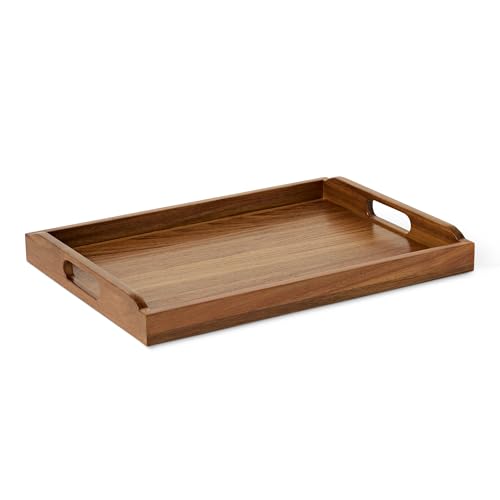

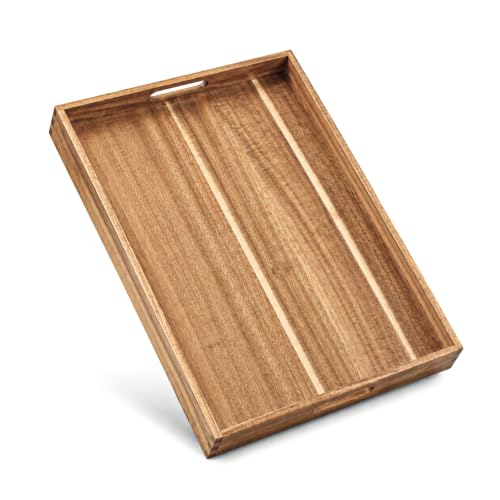

As an Amazon Associate we earn from qualifying purchases at no extra cost to you. Ratings are shown as listed on Amazon.
Quick comparison of the main choices
| Tray type | Typical dimensions | Approx. empty weight | Practical load | Best for | Main drawback |
|---|---|---|---|---|---|
| Bamboo | 16 x 12 x 2 inches | 2.0–3.5 lb | 6–10 lb | Budget use and occasional breakfasts | Edges and glue joints can swell if soaked |
| Rubberwood | 17 x 13 x 2.5 inches | 3.0–4.5 lb | 8–12 lb | Everyday indoor serving | Usually less naturally water-resistant than teak |
| Acacia | 18 x 13 x 2.5 inches | 3.5–5.5 lb | 10–15 lb | Decorative serving and heavier dishes | Grain and color can vary substantially |
| Beech or maple | 16 x 12 x 2 inches | 3.0–4.5 lb | 8–12 lb | Stable, smooth food presentation | Needs prompt drying after washing |
| Teak | 18 x 13 x 2.5 inches | 4.0–6.0 lb | 10–15 lb | Frequent use and humid kitchens | Costs more and may feel heavy when loaded |
These are useful buying ranges rather than guarantees. Construction matters as much as species: a thin tray with a weak base may carry less than a thicker tray made from a less expensive wood.
Best tray by situation
| Your situation | Recommended specification | Why it fits |
|---|---|---|
| Small kitchen or apartment | 14–16 x 10–12 inches; under 3.5 lb empty | Stores easily and remains maneuverable through narrow spaces |
| Daily breakfast and coffee | 16–18 x 12–13 inches; 2.5–3-inch rim | Balances capacity with spill protection |
| Serving a family meal | 18–22 x 13–16 inches; reinforced base | Fits multiple plates, but requires stronger handles and two-handed lifting |
| Decorative occasional use | Acacia or teak; 1.5–2-inch rim | Emphasizes grain and presentation without excessive bulk |
| Older users or limited grip strength | Under 3 lb empty; broad, rounded handles | Reduces the total lifting force and avoids sharp pressure points |
Wood species: which one is the better buy?
Bamboo: light and affordable
Bamboo trays are often the least expensive option, commonly falling in the $20–$45 range. They are light, attractive, and suitable for dry items such as mugs, packaged snacks, or toast. Bamboo is technically a grass, and many trays are laminated from narrow strips. Inspect the seams for even bonding and avoid models with visible gaps or rough transitions around the handles.
The main ownership issue is moisture. Do not leave a bamboo tray submerged or allow water to sit around the base. A laminated tray can gradually show raised seams, discoloration, or edge lifting when repeatedly soaked.
Rubberwood and beech: practical everyday woods
Rubberwood and beech offer a smooth, relatively uniform surface at a moderate price, usually about $30–$70. They are good choices for indoor breakfast and drink service because dents and scratches are less visually distracting than on highly figured wood.
These woods are not maintenance-free. Wipe spills promptly, wash by hand when necessary, and dry both sides. A tray that is repeatedly left damp against a countertop is more likely to warp, regardless of its advertised wood species.
Acacia: attractive grain with variation
Acacia is popular for its contrasting grain and warm color. A well-built acacia tray often costs $35–$90 and works particularly well when the tray stays visible on a coffee table or kitchen island. Natural variation means two trays of the same model may not look identical.
Look for a level base and a finish that does not feel sticky. Very dark, heavily coated surfaces can conceal early wear but may also show rings and scratches more clearly.
Teak: the premium durability choice
Teak usually costs more, often $60–$140, but its naturally oily wood is comparatively tolerant of occasional humidity. It remains a sensible choice for frequent serving or homes where the tray may move between kitchen, patio, and dining areas, provided the specific tray is intended for that use.
Teak is dense, so a large tray can become difficult to carry once loaded. Choose a smaller size if the tray will routinely hold drinks or heavy ceramic dishes.
Dimensions and load capacity matter more than appearance
Measure the surface where the tray will be stored, not just the table where it will be used. A 20-inch tray may fit a dining table but fail to fit a cupboard, shelf, or refrigerator-top storage area. Also check the interior usable area: thick rims and large handles can reduce the space available for plates by several inches.
A simple load calculation helps prevent overbuying. Suppose a tray weighs 4 pounds empty, two mugs weigh 1.5 pounds, a coffee pot weighs 3 pounds, and breakfast plates and food weigh 4 pounds. The total is:
4 + 1.5 + 3 + 4 = 12.5 pounds.
For that setup, select a tray with a stated or structurally credible capacity of at least 15 pounds, rather than one advertised for “light serving.” Keep heavier items centered and place tall containers away from the handle side to reduce tipping torque.
Handle comfort and raised edges
Cutout handles should have rounded edges, enough room for four fingers, and no sharp transition where the hand enters the opening. A useful target is an opening at least 4 inches wide and 1 to 1.5 inches high, although larger hands may need more clearance. Handles that are merely shallow finger slots can become painful under a full load.
Attached side handles can provide more clearance than cutouts, but they introduce fasteners and joints that may loosen. Check that screws are recessed or capped, and that the handles do not flex independently from the tray body.
Raised edges between 2 and 3 inches are the most versatile. Edges under 1.5 inches do little to contain a sliding cup, while edges above 3 inches can obstruct access and reduce usable surface area. A gently sloped or rounded rim is easier to clean than a deep, square channel that traps crumbs.
Finish quality and cleaning requirements
Choose a surface that feels smooth but not plastic-like or tacky. Food-safe finishes commonly include mineral oil and wax blends, hardwax oils, and cured clear coatings. The finish should be even across the base, corners, rim, and handle openings. Avoid trays with strong chemical odor, flaking coating, exposed raw end grain, or cloudy patches.
- Wipe the tray after each use with a damp cloth and mild dish soap.
- Dry immediately, including the underside and handle openings.
- Never put a wooden serving tray in a dishwasher unless the manufacturer explicitly permits it.
- Do not soak it, leave standing water on it, or use abrasive scouring pads.
- Use a diluted food-safe cleaning solution for sticky residue, then wipe with clean water and dry.
- Recondition unfinished or oil-finished wood when it looks pale, dry, or rough, following the maker’s recommended product.
Do not use cooking oil as a substitute for board or furniture oil. Oils such as olive oil can become rancid and leave an unpleasant odor. A tray used for unwrapped food should have a finish specifically described as food-safe.
What wears out first?
The first failure point is often not the tray surface but the handle joint, especially on large trays carried with one hand. Check the screws or glued joints periodically and stop using the tray if a handle rocks, cracks, or separates. The next common problems are finish dulling around frequently handled areas, dark water marks near the rim, and warping caused by uneven drying.
For an everyday tray used five times per week, a $60 tray costs about $0.23 per use during its first year:
$60 ÷ (5 uses × 52 weeks) = approximately $0.23 per use.
That calculation favors a well-constructed mid-priced tray over a very cheap model that needs replacement after repeated moisture damage. For occasional decorative use, appearance and storage dimensions may reasonably matter more than maximum capacity.
Bottom line
Choose a 16-by-12-inch bamboo, rubberwood, beech, or maple tray if you want a light, affordable daily option. Move to acacia for stronger visual character and a larger serving surface. Choose teak when frequent use, humidity, and long-term finish stability justify the higher price. Whatever the species, prioritize rounded handles, a level reinforced base, 2- to 3-inch raised edges, a clearly stated food-safe finish, and cleaning instructions you will realistically follow.