Key takeaways
- The best guitar multi effects pedals in 2026 are the Line 6 HX Stomp XL for most players, the Fractal FM3 Mk II Turbo for the most detailed amp modeling, the Boss GT-1000CORE for compact professional rigs, and the Zoom…
The best guitar multi effects pedals in 2026 are the Line 6 HX Stomp XL for most players, the Fractal FM3 Mk II Turbo for the most detailed amp modeling, the Boss GT-1000CORE for compact professional rigs, and the Zoom G6 or Valeton GP-200 when keeping the budget below roughly $500 matters most.
Our top picks

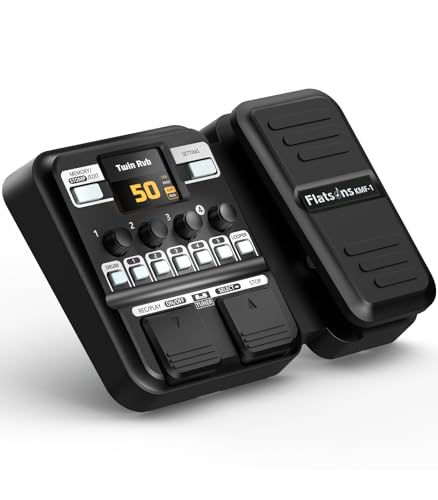


As an Amazon Associate we earn from qualifying purchases at no extra cost to you. Ratings are shown as listed on Amazon.
Quick picks by playing situation
| Situation | Best fit | Why it stands out | Typical market range |
|---|---|---|---|
| One board for rehearsals, gigs, and recording | Line 6 HX Stomp XL | Strong amp and cab models, eight footswitches, snapshots, USB audio, and a compact footprint | $650–$800 |
| Highest-end amp-modeling detail | Fractal FM3 Mk II Turbo | Excellent amp, cab, and effects processing with deep editing and a powerful scene system | $1,100–$1,400 |
| Small professional backup or wet/dry rig | Boss GT-1000CORE | Compact, reliable, MIDI-friendly, and capable of complex routing | $650–$800 |
| Touchscreen workflow and all-in-one operation | Neural DSP Quad Cortex | Fast touchscreen editing, captures, dual signal paths, and flexible routing | $1,600–$1,900 |
| Affordable full-size floorboard | Zoom G6 | Large display, expression pedal, looper, drum patterns, and straightforward controls | $350–$500 |
| Lowest-cost serious modeling option | Valeton GP-200 | Useful amp and effects selection, color display, expression pedal, and USB recording | $300–$450 |
What separates the best guitar multi effects pedals
Price alone does not determine whether a multi-effects unit will work for your rig. Four specifications matter more: the quality of the amp and cabinet models, how much digital signal processing (DSP) remains for simultaneous effects, whether the footswitches suit your performance style, and how easily the unit connects directly to a PA or computer.
Amp-modeling quality
High-end units such as the Fractal FM3 Mk II Turbo, Neural DSP Quad Cortex, Line 6 Helix family, and Headrush Prime offer convincing differences between clean, edge-of-breakup, crunch, and high-gain sounds. Their cabinet options and microphone simulations also give you more control over the sound sent to a mixer or audio interface.
Less expensive processors can still sound very good, particularly through headphones, powered speakers, or a full-range PA. The usual compromise is less realistic power-amp behavior, fewer cabinet-microphone choices, or more noticeable harshness when high-gain patches are played loudly. A budget unit may be entirely adequate if you use one or two core tones rather than switching between many detailed presets.
For a traditional guitar cabinet, turn off the modeled cabinet section and use an appropriate output mode. For direct-to-PA use, keep the cabinet or impulse-response stage active. Sending a preamp model straight to a PA without speaker simulation is one of the most common causes of an thin, fizzy tone.
DSP limits and simultaneous effects
Multi-effects processors do not all define “number of effects” the same way. A unit may advertise dozens of algorithms but still run out of DSP when you combine a dual amp setup, stereo pitch shifting, shimmer reverb, multiple delays, and several high-quality drives.
The HX Stomp XL uses a fixed signal-path budget and can run out of capacity sooner than a larger Helix Floor or Fractal system. The GT-1000CORE has a sophisticated routing system, but certain algorithms consume more processing than others. The FM3 Mk II Turbo and Quad Cortex offer more headroom for complex scenes, although even these units have limits when running multiple amp and cab paths.
For ordinary live presets, count the blocks you actually need: tuner, noise gate, compressor, drive, amp, cab, modulation, delay, reverb, and looper or external effects loop. That is usually more useful than comparing total effect counts. If you need two amps, stereo outputs, pitch shifting, and long ambient reverbs at the same time, choose a higher-tier processor rather than assuming a firmware update will solve the limitation.
Head-to-head: the strongest choices
Line 6 HX Stomp XL: the best balance
The HX Stomp XL is the safest recommendation for many guitarists because it combines Helix modeling with eight capacitive footswitches, snapshots, an effects loop, MIDI, balanced outputs, and USB audio. It is small enough for a crowded pedalboard but more usable live than the original HX Stomp.
Its main limitation is DSP capacity. A patch with one amp, one cab, a few drives, modulation, delay, and reverb is practical; an elaborate dual-amp studio chain may require compromises. Its amp models are strong, and the Helix ecosystem makes preset sharing, editing, and future firmware support relatively accessible.
Fractal FM3 Mk II Turbo: best for modeling depth
The FM3 Mk II Turbo is the choice for players who prioritize amp feel, cabinet control, and detailed parameter editing over immediate simplicity. Fractal’s scenes and channels allow multiple sounds inside one preset, while the onboard footswitches can be expanded with an external controller.
It is less beginner-friendly than the HX Stomp XL. The front-panel screen and menus are functional, but creating sophisticated presets takes time. It also has fewer built-in footswitches than a full-size floorboard, so a performer who wants one switch per song function may need an external controller.
Boss GT-1000CORE: best compact professional tool
The GT-1000CORE is unusually capable for its small enclosure. It supports complex routing, MIDI control, amp and cabinet simulation, USB audio, and integration with external pedals. Boss effects such as delays, reverbs, modulation, and pitch processing are a major strength.
The interface is more menu-driven than the HX Stomp XL or Quad Cortex. Its amp modeling is competitive, but players who care primarily about nuanced amp breakup may prefer Fractal, Neural DSP, or Line 6. It makes particular sense as the centerpiece of a hybrid board rather than as a beginner’s plug-and-play pedal.
Neural DSP Quad Cortex: best touchscreen workflow
The Quad Cortex offers a large touchscreen, fast routing, dual signal paths, captures of amplifiers and pedals, extensive connectivity, and four external expression or footswitch inputs. It is especially attractive for players who want separate electric, acoustic, bass, or vocal-style setups in one device.
Its price and size put it in a different category from budget processors. It also rewards a stable preset-management routine: create performance scenes carefully, label outputs clearly, and maintain backups before major firmware changes. The touchscreen is quick for editing, but physical footswitch assignments still require planning for live use.
Zoom G6 and Valeton GP-200: affordable alternatives
The Zoom G6 is a practical value option with a large color display, expression pedal, looper, rhythm functions, and a broad selection of effects. It is well suited to home practice, rehearsals, and players learning how signal chains work.
The Valeton GP-200 offers a more compact modern modeling workflow, color display, expression pedal, USB recording, and flexible footswitch assignments. Neither is as deep or as refined in amp feel as the premium choices, but both can produce usable direct sounds without adding a separate audio interface.
Physical size and connection comparison
| Model | Approx. dimensions | Approx. weight | Useful live and recording connections |
|---|---|---|---|
| Line 6 HX Stomp XL | 31.6 × 12.0 × 6.6 cm | 1.5 kg | Stereo outputs, effects loop, MIDI, USB audio, headphone output |
| Boss GT-1000CORE | 17.3 × 13.5 × 5.6 cm | 1.0 kg | Stereo outputs, effects loop, MIDI, USB audio, headphone output |
| Fractal FM3 Mk II Turbo | 39.0 × 25.5 × 10.1 cm | 3.2 kg | Balanced outputs, effects loop, MIDI, USB audio, headphone output |
| Neural DSP Quad Cortex | 29.0 × 19.0 × 7.1 cm | 1.95 kg | Multiple analog inputs and outputs, effects loops, MIDI, USB audio |
| Zoom G6 | 43.5 × 22.8 × 7.6 cm | 1.94 kg | Stereo outputs, effects loop, USB audio, headphone output |
| Valeton GP-200 | 31.0 × 14.7 × 5.1 cm | 1.4 kg | Stereo outputs, effects loop, MIDI, USB audio, headphone output |
Dimensions and weights can vary slightly by revision or published specification. The practical takeaway is that the GT-1000CORE is easiest to fit onto an existing pedalboard, while the FM3 and G6 need dedicated floor space. Check your case, power supply, and cable clearance—not only the enclosure dimensions.
Direct-to-PA and USB recording setup
- Choose the correct output mode. Use a full-range or direct mode when sending the processor to a PA, powered monitor, or recording interface. Use a cabinet-focused mode only when feeding a guitar power amp and physical cabinet.
- Build one reference preset. Set the amp volume, cabinet simulation, and global output level before copying the preset to other songs. This prevents every patch from arriving at the mixer at a different volume.
- Set USB routing deliberately. Select whether the computer receives the processed signal, a dry guitar track, or both. Recording a dry track alongside the processed track gives you the option to reamp later.
- Leave headroom. Keep loudest playing peaks below digital clipping. A patch that sounds acceptable alone may overload a USB input or PA channel when an overdrive and boost are combined.
- Test the complete chain. Listen through the same headphones, monitor, or PA type you will use at the performance. A patch designed through small computer speakers may have excessive bass or treble elsewhere.
Durability and ownership costs
Footswitches, expression-pedal mechanisms, jacks, and cable connections usually experience more wear than the modeling electronics. Keep the unit covered during transport, avoid placing drinks nearby, and use strain relief so instrument cables do not pull on side-mounted jacks. Clean footswitch surfaces with a dry or barely damp cloth; do not spray cleaner into switches or connectors.
Most floor processors use external power supplies rather than replaceable batteries. Budget for a compatible replacement supply or a pedalboard power solution, but verify voltage, polarity, and current requirements first. A universal adapter with the wrong specifications can damage a processor.
For occasional players, a $350–$500 unit can be better value than a premium model that spends most of its life unused. For weekly gigs, the cost difference is easier to justify: a $1,200 processor used twice per week for three years costs about $3.85 per use before accessories, while a $400 unit used ten times per year costs about $13.33 per use over the same period. The better purchase is the one whose footswitch layout and workflow make you want to use it regularly.
Final recommendation
Choose the HX Stomp XL if you want the strongest all-round balance of sound, size, controls, and USB recording. Choose the FM3 Mk II Turbo for maximum amp-modeling depth, the GT-1000CORE for a compact hybrid board, and the Quad Cortex for a premium touchscreen and capture-based workflow. If your budget is limited, the Zoom G6 and Valeton GP-200 provide the essential direct-to-PA and recording features without requiring a separate collection of pedals.